
DEEP DIVE: THE 'EPSTEIN CLIENT LIST' - AN ORIGIN STORY
The birth of the 'Epstein client list' myth is far more complex than you may think, conceived from conspiracy theories with age-old roots. Let's take a VERY deep dive...

It was a cold December morning in Washington, D.C., when Edgar Maddison Welch, a 28-year-old man from North Carolina, arrived at the modest brick-front pizzeria on Connecticut Avenue. His hands trembled not from the bite of winter but from something else entirely—a sacred purpose, he believed, a duty forged in the depths of online message boards. He had, like hundreds of thousands of others now invested in the scandal, learned of a satanic child trafficking ring operating from the establishment’s basement, had scrolled for what seemed like days on end at all the ‘evidence’ and viral videos ‘proving’ that democrat elites were secretly harvesting the blood of children there to create a life-lengthening elixir.
In his car, the cold steel of an AR-15 rested within arm’s reach, and as he stepped outside, with every step toward the restaurant, his heartbeat, like the measured toll of a cathedral bell, grew louder.
Inside ‘Comet Ping Pong’, the trendy pizzeria whose likeable owner had helped senior democrats, including Hillary Clinton, hold campaign fundraisers, the clatter of pizza trays and the faint ping of arcade games rang out—ordinary sounds of an ordinary day. Parents sat with children. Laughter floated in the air.
Welch entered with determination. He fired his weapon. Panic erupted. People scattered like startled starlings.
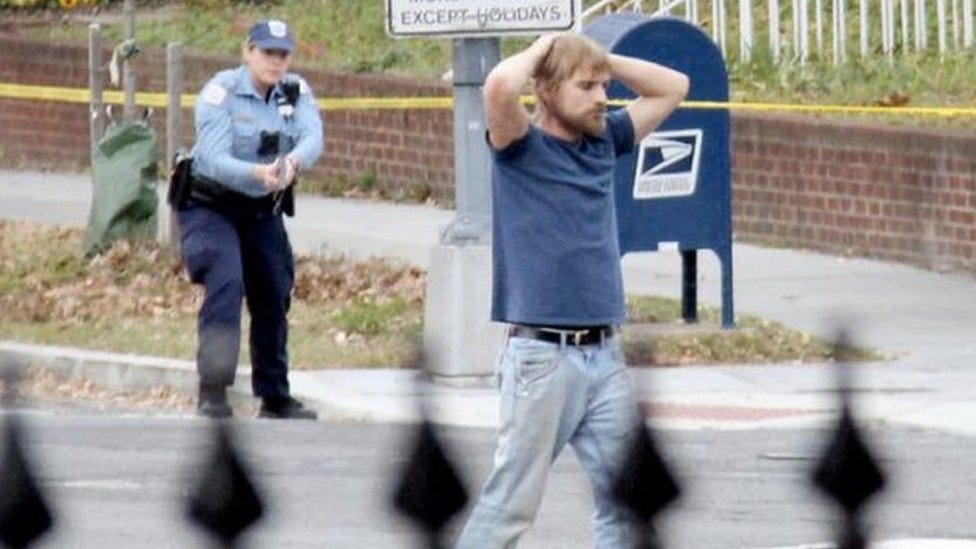
But as he moved from room to room, kicking open supply closets and peering into kitchens, he found nothing but the banal trappings of a family eatery. No basement. No secret tunnels. No trapped children. No satanic altar. Just ovens and soft drink dispensers. He laid down his rifle and surrendered to the police. The silence that followed was deafening.
The media covered the story as the inevitable conclusion of the viral conspiracy theory known as “Pizzagate.”
Yet Pizzagate was not born in that pizzeria; it was birthed in the labyrinthine corridors of the internet, gestated by whispers, nurtured by shadowy figures whose faces were obscured by usernames. It was a story that began long before Welch’s rifle found the linoleum floor.
The story, as stories often do, had ancestors.
In the beginning, there was a seed—ancient, perhaps as old as civilisation itself. It grew from a lineage of blood libel, of whispers that first turned against Christians, then Jews, and later against any group considered ‘other.’
I know what you’re probably thinking: How does any of this relate to the Epstein client list?
Let’s answer that with a deepdive through history, through ancient beliefs, fears, political and religious agendas, smears and scapegoats.
Pagan societies, finding in the emerging Christian sects a threat to their customs, alleged that members of the Christian ‘elite’ met in caves and secret tunnels where they engaged in unthinkable rituals—the stabbing of infants, the consumption of blood-soaked bread, and then engaging in bacchanalian sex romps that included paedophilia.

Minucius Felix, a Latin Christian apologist writing in the late second century AD, recorded the following widely-believed accusations of infanticide and ritual orgies levelled against early Christians, stating that, upon gathering in secret:
“An infant covered over with meal, that it may deceive the unwary, is placed before him who is to be stained with their rites: this infant is slain by the young pupil, who has been urged on as if to harmless blows on the surface of the meal, with dark and secret wounds. Thirstily — O horror! — they lick up its blood; eagerly they divide its limbs. By this victim they are pledged together; with this consciousness of wickedness they are covenanted to mutual silence. … On a solemn day they assemble at the feast, with all their children, sisters, mothers, people of every sex and of every age. There, after much feasting, when the fellowship has grown warm, and the fervour of incestuous lust has grown hot with drunkenness, a dog that has been tied to the chandelier is provoked, by throwing a small piece of offal beyond the length of a line by which he is bound, to rush and spring; and thus the conscious light being overturned and extinguished in the shameless darkness, the connections of abominable lust involve them in the uncertainty of fate.
Of course, it was all a lie, a grotesque fabrication exaggerating and completely misrepresenting the eucharist, the harmless ritual commemoration of Jesus’ Last Supper. Indeed, such gatherings of worship were often held in secret, sometimes in tunnels and caves, as numerous archaeological discoveries demonstrate - but only due to participants seeking to avoid being arrested and/or fed to the lions in the colosseum by the natives, the Roman pagans, who forbade the worship of Christ.
The addition of untamed sex, child abuse and other forms of crimibality and wild debauchery were of course just further bizarre smears and embellishments.
But the false accusations against the christians served their intended purpose, to demonise followers of a new rival religion.
Centuries later, the accusations changed hands. After what seemed like an eternity of perecution, Christianity had finally taken charge of things. Their oppressors, the pagans, were now the minority group, ‘perfect for persecuting’.
The Christians branded them heretics, spreading propaganda far and wide of how pagans worshipped the devil in caves and secret underground tunnels, engaging in a range of evil and debauched acts involving blood, sex, paedophilia, and child sacrifice.
The Jews had also not been spared, finding themselves the target of the smear campaigns spread to instil fear and division, their communities set ablaze by the same baseless charges. The elites, the baby, the blood, the secret rites—the narrative was always the same, because it always worked in turning the public against the chosen targets and was the perfect weapon for smearing religious or political rivals.
The Byzantine encyclopaedia, The Suda, falsely claimed: “Every seven years, the Jews captured a stranger, brought him to the temple in Jerusalem, and sacrificed him, cutting his flesh into bits.”
Other widely believed, completely false claims spoke of Jewish leaders congregating in secret underground tunnels and chambers to sacrifice children and drink their blood as offerings to a demonic god symbolised in statues of a “horned goat-like beast”.
Even as the modern world adorned itself with the trappings of logic and reason, the ghost of these fictions lingered.
Over the centuries, as this conspiracy story was rehashed and used by political opponents of Jewish leaders and pagans, mass hysteria over witchcraft dominated, with tens of thousands of innocent women being falsely accused of consorting with the devil to harm children and corrupt the world, dragged to stakes and burned alive.
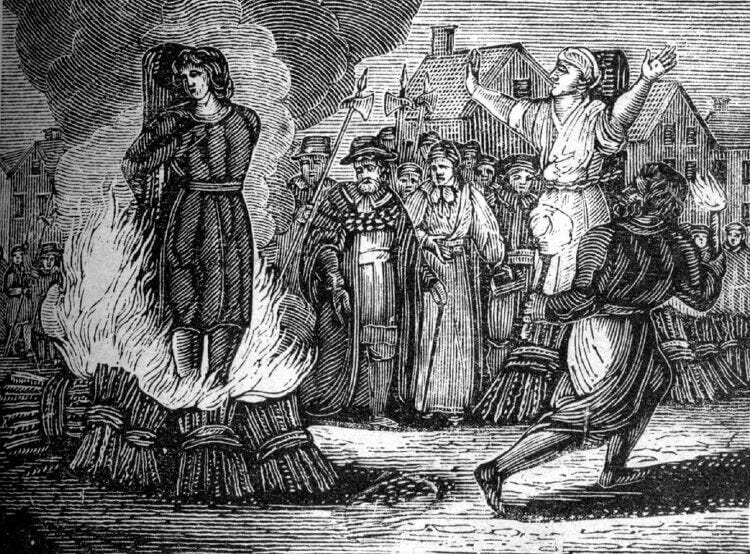
Large numbers of Jews were rounded up, tortured, and executed by mobs in towns and cities across the Western world, particularly in Europe.
The claims made against Jews almost always involved accusations of paedophilia, devil worship, and being members of secret organisations centred around the abuse and sacrifice of children.
One example of many took place in the 15th century. On Easter Sunday, 1475, in Trent, Italy, a two-year-old child named Simonino went missing, and a Franciscan preacher, Bernardino da Feltre, gave a series of sermons claiming that the Jewish community had murdered the child, drained his blood and drunk it to celebrate Passover and worship the devil.
The rumours spread like wildfire, engulfing the local community in outrage and demands for an investigation and retribution. Before long, da Feltre claimed that the boy’s body had been found in the basement of a Jewish house. In response, the Prince-Bishop of Trent, Johannes IV Hinderbach, immediately ordered the city’s entire Jewish community arrested and tortured. Fifteen were found guilty and burned at the stake, despite not a single shred of evidence being found to suggest any guilt. In the days and weeks following the Trent incident, citizens in other cities and towns were inspired to commit similar atrocities against the Jewish community, and the conspiracy theory became ingrained in common thought.
Recognising a false story, the papacy intervened and attempted to stop both the story and the murders. Yet Hinderbach – in a trait held by conspiracy theorists that persists to this day - refused to meet the papal legate, and, feeling threatened, simply spread more fake news stories about Jews drinking the blood of Christian children, allowing members of the public to interpret his messages and carry out their own amateur investigations. In the end, the popular fervour supporting these anti-semitic blood libel stories made it impossible for the papacy to interfere with Hinderbach, who had Simonino canonised.

Today, historians have catalogued the fake stories of child-murdering, blood-drinking Jews as part of the foundation of anti-Semitism and the spread of paedophilia-based satanic child-trafficking and human sacrifice conspiracies into modern-day society; recently evidenced by 21st Century conspiracy theorists frequently linking Jewish elites such as George Soros and the Rothschilds to claims of secret satanic paedophilia, child sacrifice, and human trafficking.
So effective and enduring were these conspiracy theories at turning the public against political opponents and enemies that during the 20th century, the vile Nazi propaganda machine heavily relied on the same conspiracy theories scaring people into bigotry over mythical tales of Jews ritually drinking children’s blood.

The notion of businesses, like ‘Comet Ping Pong’, being used as fronts by satanic paedophiles is a common theme among conspiracy theorists, used to cause outrage and opposition to political opponents and religious groups for hundreds of years, becoming even more prevalent during the 20th century.
Before the arrival of the internet, in the 1980s, stories very similar to Pizzagate spread across the country – and did even more damage. These conspiracies were spread by fringe groups and promoted by the mainstream media and journalists seeking to exploit the public’s desire for sensationalism and scandal.
The age-old ‘satanic child trafficking, sacrifice and blood-drinking’ conspiracy was at the heart of the notorious McMartin Preschool case that took place during the 1980s and 90s at a time when Christian America became gripped by what was then labelled by the press as ‘satanic panic’.
In 1983, Judy Johnson, mother of one of the Manhattan Beach, California, preschool’s young students, reported to the police that her son had been sodomised by her estranged husband and by McMartin teacher Ray Buckey. Ray Buckey was the grandson of school founder Virginia McMartin and the son of administrator Peggy McMartin Buckey.
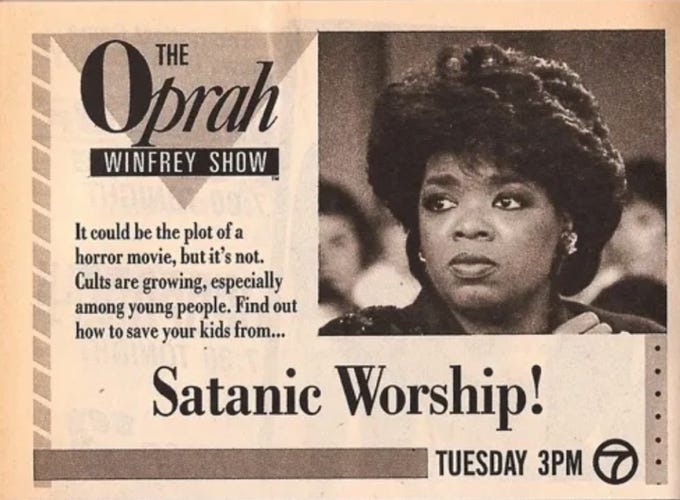
Encouraged by sensationalist media coverage, hysteria-peddling platforms such as The Oprah Winfrey Show, and by the general public, some of the abuse was then said to have occurred in secret tunnels beneath the school. Several excavations turned up evidence of old buildings on the site and other debris from before the school was built, but no evidence of any secret chambers or tunnels was ever found.
Despite this, as mass outrage broke out among the general public, members of the McMartin family, who operated the Californian preschool, were charged with numerous acts of sexual abuse of children in their care. The case lasted seven years and resulted in the conviction of 70 people. Later, however, it transpired that the initial claims made by the mother in question were made while she was suffering from mental illness. Severe instances of misconduct by the police force were found, all evidence was debunked, and all charges were dropped in 1990. By the case’s end, it had become the most protracted and most expensive in American history. Yet despite being exposed as a dangerous myth, Satanic Panic spread through word of mouth and the feeding frenzy of popular media. By the end of the 1980s, unfounded paranoia was international.
Another example was seen in Rochdale, England, where, in 1990, twenty children were removed from their homes by social services who alleged they were victims of SRA (Satanic Ritual Abuse). Eventually, the allegations were found to be baseless, and the children later successfully sued the city council in 2006.
In 1992, in Martensville, Canada, as a result of ‘Satanic Panic’, over a dozen innocent people, including five police officers, were wrongly charged with participating in a complex satanic cult focusing on paedophilia and child trafficking. All would later be exonerated and awarded financial compensation after the investigation comprehensively debunked the wild claims made against them.
In the same year, this time in Texas, Daniel and Frances Keller were falsely accused of running an underground paedophile network and committing Satanic abuse against children. Both spent a terrifying twenty-one years in prison until the case was reopened and the accusations were found to have been completely fabricated.
Also in America, between 1968 and 1987, a man by the name of John Wayne Todd caused public hysteria by giving well-attended speeches claiming that a nationwide Satanic paedophile cult existed. Todd accused various elites and prominent members of society of being members of the Illuminati and the Satanic cult until reporters confirmed he had invented the claims, along with others. Ironically, Todd was himself later convicted of rape and rightly jailed.
In 1980, Psychologist Lawrence Padzer and his wife Michelle Smith co-authored the book ‘Michelle Remembers’, a memoir detailing Michelle’s alleged childhood experiences of being abused by elitist members of ‘The Church of Satan’. The Daily Mail later exposed the couple as frauds and the book as a work of fiction. Yet due to public sensationalism, the book continued to be used by child welfare agents. Though a dangerous myth, many in America still believe the conspiracy theory to be credible.

In 1980, in Bakersfield, California, social workers had been forced to read ‘Michelle Remembers’ as part of their training when several children came forward to declare that they had been molested as part of a clandestine local occult sex ring. Two of the girls had been coached by a grandparent who was believed to have a history of mental illness.
Over the coming months, accusations of occult sex acts would grow even more bizarre, as they claimed to have been hung from hooks in their family’s living room, forced to drink blood and watch ritual baby sacrifices. At the time, conspiracy theorists also began spreading false claims that the Illuminati, world leaders, and various celebrities were implicated in the scandal. As a result of media sensationalism, public outrage, and police malpractice, between 1984 and 1986, the investigation into claims of satanic ritual abuse would send at least 26 people to jail, despite a complete absence of corroborative evidence. Parents Scott and Brenda Kniffen were each sentenced to 240 years after their own sons were coached, through coercive investigative techniques and overeager therapists, to accuse them of child molestation. Both children later recanted, and the Kniffens were released after serving 12 years in prison. As adults, several of the children involved in the trials professed to have been traumatised by their own earlier false testimony.
Satanic panic spread through word of mouth and the feeding frenzy of popular media, as well as through professional criminologists and horror films and literature of the time. By the end of the 1990s, paranoia over mythical satanic cabals had become a firmly established, international phenomenon that persists to this day.
A notably ugly case took place in 2014, in Hampstead, England, whereby two children were forced to falsely accuse their father and numerous people of satanic abuse and paedophilia. The children were coerced by their mother, Ella Draper, and her boyfriend, Abraham Christie, after suffering relentless emotional and psychological pressure, as well as significant physical abuse. Draper went on the run and was later arrested by police in Malta for unrelated drug offences. Her disturbing videos have been viewed millions of times and continue to deceive many online.

In her book about the SRA hysteria, Satan’s Silence, journalist Debbie Nathan elucidates this basic blueprint for Satanic Panic: “To right-wing Christian fundamentalists steeped in lore about devils and stewing with hostility toward public child care, it was hard not to embrace the notion of Satan infiltrating day-care centres or everyday society”.
A more recent prolific case involving false claims of a ‘Satanic paedophile ring’ made up of political elites came in 2014 when 54-year-old serial false accuser Carl Beech stated he was among many victims of high-profile establishment figures who raped and murdered children in the 1970s and 1980s. On July 22nd, a two-month trial at Newcastle Crown Court ended with the conviction of Beech on 12 counts of perverting the course of justice and one count of fraud.
A seemingly unremarkable NHS manager, Beech, had spun a web of falsehoods, naming numerous men—alive and dead—from the world of politics, the army, and the security services, of murder and mind-bogglingly dreadful acts of child sexual abuse.
A year after the death of paedophile Jimmy Savile, on October 3rd, 2012, ITV broadcast a documentary entitled The Other Side of Jimmy Savile, which accused him of serious sex crimes. Three weeks later, Carl Beech complained to Wiltshire Police that he and a childhood friend from Bicester called “Aubrey” had been abused as children by a number of people he called “The Group.
Beech began to promote himself on social media. He opened an account on Twitter with the handle @carl_survivor, called himself ‘Nick’, and posted regular blogs about his abuse by “The Group”, which gained him mass support – particularly from conspiracy theorists who began to add claims of Satanic rituals into the allegations.
One of Beech’s methods was to seize upon internet rumours and to pretend the same thing had happened to him. At other times, he appropriated the real suffering of others for his own ends. Andi Lavery, for example, who had been appallingly abused at a Catholic boarding school, was telephoned by Beech, who tried, as Lavery put it, “to access my memories and try to use my truth and the horrors of my childhood to further his own malodorous ends.” For his refusal to join the online cult of #IbelieveNick, Lavery was then subjected, like others who publicly doubted Beech, to a tsunami of abuse.
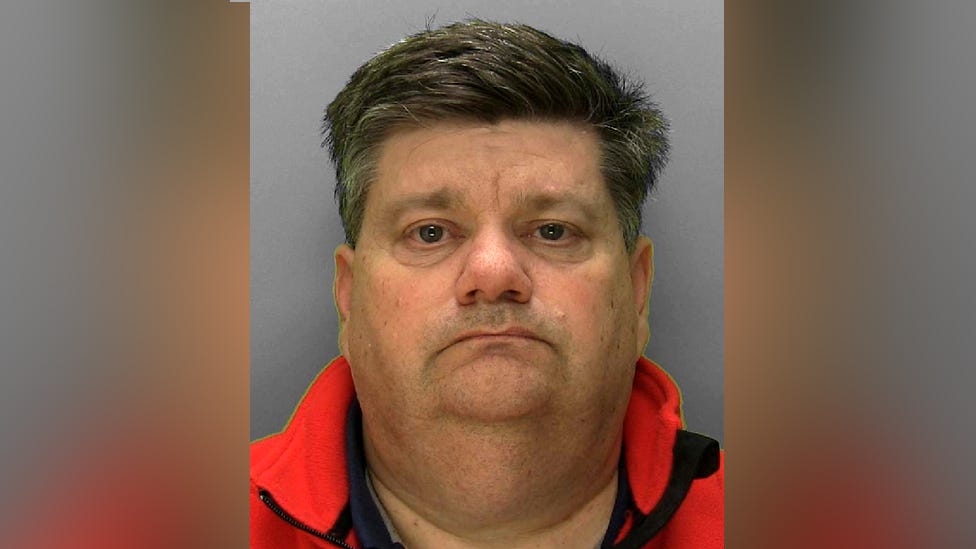
Over the months that followed, Beech’s accusations developed into claiming that “The Group” consisted of various politicians, were widely believed on social media, and heavily promoted by the press, including by radio host James O’Brien.
Beech’s targets were Tory establishment figures such as the completely innocent MP Harvey Proctor. Only one, former Labour MP Greville Janner, was from the Labour Party, and his prominent position within the British Jewish community and support for Israel made him, like Lord Brittan, a perfect target for antisemitic agitators. As well as lives being ruined, millions of pounds were spent investigating his claims, which were found to be false. It later emerged during his trial that Beech had pleaded guilty in January to paedophilia.
In recent years, there has been growing interest in the psychological factors that drive the popularity of conspiracy theories; and to understand a conspiracy theory, we must first understand not only how it spreads, but why, by delving into mankind’s natural inclination to believe the unbelievable. Jan-Willem van Prooijen, an associate professor at the Department of Experimental and Applied Psychology of VU Amsterdam, told me: “It would be tempting to dismiss those who believe such bizarre ideas as mentally ill. But in reality, conspiracy beliefs such as QAnon are neither pathological nor novel. Putting aside the fact that some conspiracy theories turn out to be true (e.g., Watergate is arguably an example of a real conspiracy), even fact-free conspiracy theories can be followed by people who otherwise behave relatively normally”. Widespread support for conspiracy theories is also not simply a symptom of our modern digital society. In the dark ages, witch-hunts were based on the belief that young women gathered in the woods to conspire with the devil, and many traditional societies still accuse enemy tribes of sorcery to harm or control them. The fear that evil forces conspire to hurt good people is deeply rooted in the human psyche.
There are three main reasons why people believe in theories like QAnon. First, accepting one conspiracy theory as true makes it much easier to believe in other theories. Studies from the mid-1990s found that the single best predictor of conspiracy thinking is the belief in a different conspiracy theory. Conspiracy theories reinforce the belief that nothing in the world happens by coincidence. This refusal to recognise the role of chance leads people to develop a worldview in which hostile and secret conspiracies permeate all layers of society. Feelings of anxiety and uncertainty also help fuel conspiracy theories. Such emotions serve as a psychological warning signal, prompting people to try to make sense of societal events that frighten them. This helps to explain the widespread (and ongoing) speculation that followed impactful events such as 9/11 or the assassination of President John F. Kennedy. Feelings of uncertainty, coupled with the feeling that your life is not fully in your control anymore, increases conspiracy thinking. Studies by other researchers confirm that emotions reflecting uncertainty, such as fear or worry, can increase conspiracy beliefs. Ironically, however, conspiracy theories do little to reduce these negative feelings.
On the contrary, conspiracy theories only exacerbate feelings of anxiety, laying the foundations for further theorising. Human brains are hard-wired to protect their own group against competing groups, and therefore more easily attribute the actions of competing groups to conspiracies. One of our most recent studies found that members of ethnic minority groups facing actual discrimination by a majority group are relatively susceptible to conspiracies: Feelings of deprivation lead marginalised minority members to perceive the social and political system as rigged, stimulating belief in both identity‐relevant and irrelevant conspiracy theories. Not surprisingly, political communities operate in much the same way. Studies by a group of political scientists revealed that Republicans are more likely to believe governmental conspiracy theories when a Democrat is President. At the same time, Democrats are more likely to believe in governmental conspiracy theories when a Republican is President.
“There are many factors that draw people toward conspiracy theories. Some of them are related to aspects of a person’s personality (e.g., narcissism, Machiavellianism, mistrust) and others are associated with social factors (e.g., powerlessness, education, age),” Karen Douglas, a Professor of Social Psychology at the University of Kent, Canterbury, told me.
In 2017, a group of researchers, including Douglas at the University of Kent, published a paper titled ‘The Psychology of Conspiracy Theories,’ in which they suggested that conspiracy theories are driven by three factors: epistemic, existential and social.
“First, conspiracy beliefs are linked to the way people process information. People have a higher tendency to believe in conspiracy theories if they feel uncertain and are motivated to find meaning or patterns in their environment,” Aleksandra Cichocka, a Senior Lecturer in Political Psychology at the School of Psychology at the University of Kent, said. Comparisons can be drawn in the human mind’s susceptibility to religion and various faith systems, whereby a person finds themselves drawn to illogical supernatural beliefs as a means to ‘answer’ questions that science has so far not been able to answer.
Conspiracy beliefs are also linked to lower levels of analytical thinking. The second reason relates to existentialism. Conspiracy beliefs increase when people feel anxious, powerless or that they lack control over their lives,” she said. “In these situations, they might be motivated to think that someone else is pulling the strings”. Regarding the possible third reason, ‘social,’ it might have to do with a deep desire to belong to a group. QAnon, a growing, complex and deeply intertwined community, perfectly fits this social need – particularly for those feeling ostracised by the wider community. And third, conspiracy beliefs are linked to the need to maintain a positive image of oneself and the social groups one belongs to,” she said. “For example, belief in conspiracy theories is higher among members of marginalised or disadvantaged groups. Presumably, believing in a conspiracy allows them to place blame for any negative experiences on others.”
“The easiest way to radicalise someone is to permanently warp their view of reality,” says Mike Caulfield, head of the American Association of State Colleges and Universities’ digital polarisation initiative. “It’s not just confirmation bias ... we see people moving step by step into alternate realities. They start off questioning, and then they’re led down the path. This path takes them into closed online communities, where members are unlikely to have real-world connections but are bound by shared beliefs.”
“What a movement such as QAnon has going for it, and why it will catch on like wildfire, is that it makes people feel connected to something important that other people don’t yet know about,” says cult expert Rachel Bernstein, who specialises in recovery therapy. “All cults will provide this feeling of being special. Not wanting to lose face or accept factual information disproving their belief system, dissent to QAnon supporters or to the movement in general is more often than not met with hostility, doxxing, and harassment, with debate or counter-speech fiercely restricted. Many reporters or individuals who have challenged the QAnon conspiracy have also found themselves publicly defamed as being either paedophiles, agents of the ‘deep state’, or both”.
“These theories probably contribute to a general sense of malaise, discontent, and the sense that you can’t trust what experts and authority figures tell you,” Professor Joshua Hart explained to me. “To a certain extent, the latter is probably healthy, but at some point it becomes corrosive to social order. My sense is that the large majority of people disregard these kinds of theories, or maybe entertain them casually, almost for fun”.
I asked Professor Hart for his thoughts on the tactic of those behind QAnon (which quickly incorporated the Epstein scandal into its core ideology), advising the movement’s audience that ‘agents’ are now at work to discredit ‘Q’ and to spread disinformation to discredit the Pizzagate conspiracy and other conspiracies peddled by ‘Q’.
“This sounds like classic dissonance reduction and is a common and necessary way to sustain tenuous beliefs,” he explained. “You have to be able to explain away the contradictions. It would be helpful to have nefarious agents actively spreading disinformation in order to discount what are otherwise inconvenient truths… An abiding sense of grievance and powerlessness might be part of it, along with partisanship (it’s a right-wing theory, right?) and personality and cognitive tendencies that draw people toward conspiracism in general. “My sense is that these theories do tend to fizzle, and Trump losing the election seems likely to hasten that process....although I’m sure the theory will also morph in ways that allow it to survive in some form”.
There is much evidence to suggest that certain conspiracy theories that originated in 2016, before, during, and shortly after the Presidential campaign were politically motivated to demonise Democrats, in particular Presidential candidate Hillary Clinton.
Exploiting the current climate and the social media craze, accusations of paedophilia are frequently used as a weapon against political opponents to defame their character and seed doubt and suspicion in the minds of voters. The political climate is a predominant contributing factor – setting the perfect conditions for politically-motivated conspiracy theories to flourish; Pizzagate being a perfect example – a conspiracy theory that is simply a carefully timed regurgitation and rehashing of prior effective smear campaigns based on conspiracy theories involving paedophile Satanists. In the months that led up to the American elections, such conspiracy theories were already being sewn by Republican-supporting social media influencers and even by members of the Republican campaign team – relying on scandalous events that had recently transpired to ensure that these new conspiracies gained traction. It was in March 2016, as the Presidential election debate heated up, that the British Police Force’s‘ Operation Midland’ was in the spotlight after Carl Beech duped the Metropolitan police and mainstream media into believing there existed a large cabal of celebrities and political elites engaged in a paedophile ring. As mentioned, Beech would find himself locked up for his crimes, but also for being a paedophile himself. Though the police force would later issue a public statement apologising to Beech’s many innocent victims, people in the media rarely issued corrections, let alone anything resembling feelings of remorse for helping to destroy the lives of innocent men and women.
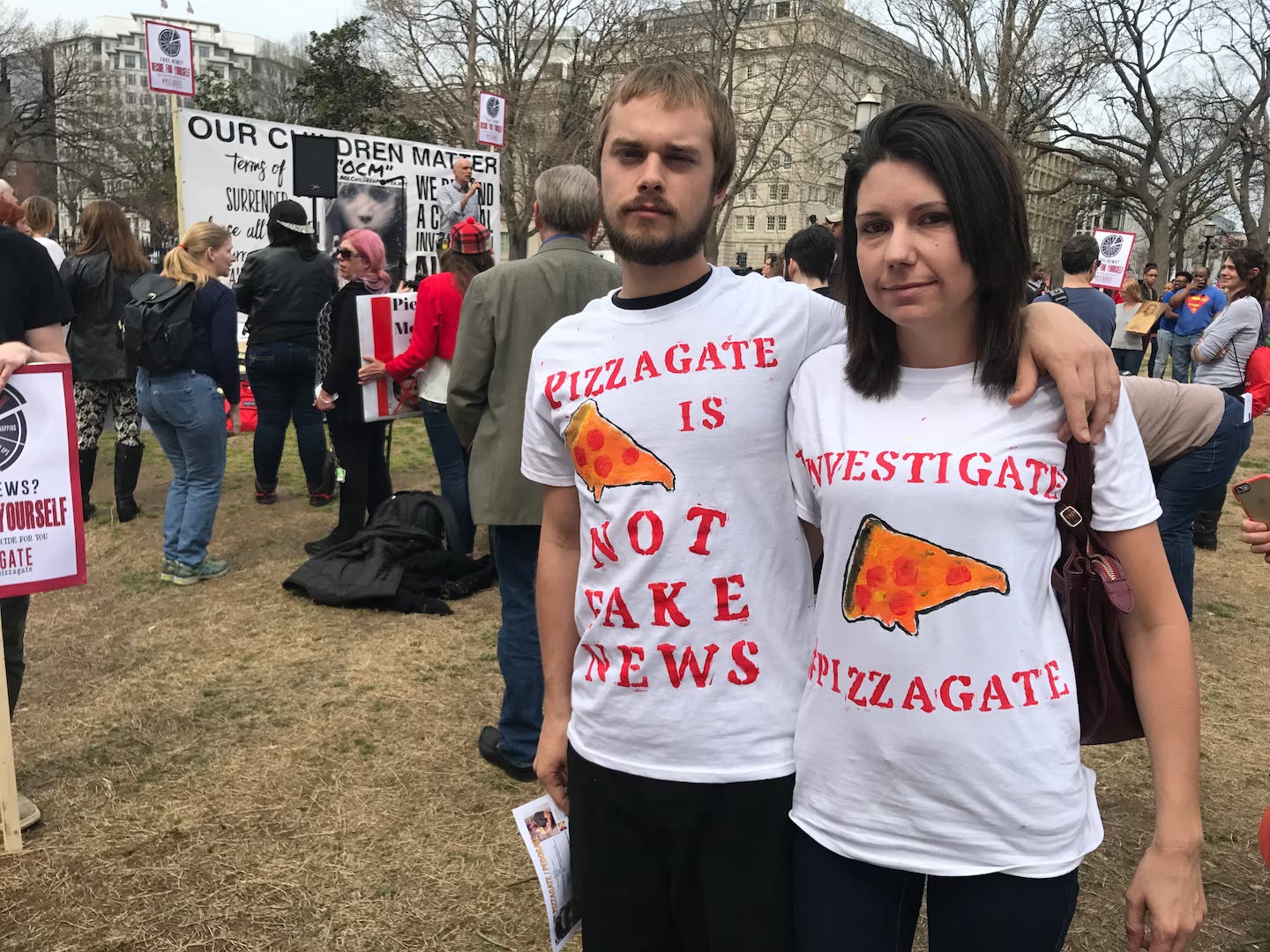
At the same time, online, many videos – all later proven to have been staged – were widely circulated as supposed evidence of organised paedophilia and Satanic worship. Public hysteria over Operation Yew Tree, Operation Midlands, and genuine isolated cases of abuse, such as the horrors exposed from the Jimmy Savile investigation, along with the rise in popularity of online independent and unverified news blogs, combined to form the perfect breeding ground for conspiracy theorists and sensationalistic political scandals. Mixed with a growing distrust in bias demonstrated by the mainstream media and an extreme rise in social media use, millions began turning to Twitter, Facebook, and other social media sites to obtain their daily news updates and information. Capitalising on this climate and public demand, libellous conspiracy personalities such as David Icke and Alex Jones began to make millions of dollars through creating ‘clickbait’ conspiracy articles and YouTube videos, using their audiences on social media to spread their false narratives and generate huge financial incomes through pay-per-click revenue sources such as Google AdSense.
Other smaller yet no less influential individuals and amateur journalists also spotted this opportunity and began creating their own blogs and media sites. Despite the general public understandably rejecting the mainstream media over its political bias, the online sources they turned to for ‘the truth’ were even more partisan and biased, with the added danger that their content was, and still is, often unchecked and unregulated. With the existence of social media, anyone – including millions of ordinary citizens – is now able to post claims or accusations presented as facts, have those claims shared and accepted by thousands, sometimes millions of people, and influence the political climate and perceptions held within society as a whole.
A tense and growingly divisive political climate in the western world has also heavily contributed to the increasing support for conspiracy theories, particularly following the breakdown of social debate following the election of Donald Trump and the vote to leave the European Union – two democratic results that further pushed members of society onto opposing, often toxic sides engaged in constant verbal, sometimes physical conflict.
Shortly before the release of the John Podesta emails by WikiLeaks, the Trump campaign’s soundbite “lock her up” in relation to Hillary Clinton was already being widely used and had long been trending on Twitter. In October 2015, Donald Trump’s senior aide and campaign strategist, Roger Stone, who was responsible for encouraging Trump to run for President and who has previously admitted to intentionally spreading fake news and smears to discredit political opponents, released his bestselling book ‘The Clintons’ War on Women’.
“Hillary Clinton is running for president as an advocate of women and girls, but there is another shocking side to her story that has been carefully covered up—until now,” the book’s blurb claimed. “This stunning exposé reveals for the first time how Bill and Hillary Clinton systematically abused women and others—sexually, physically, and psychologically—in their scramble for power and wealth”.
Stone would later go on to publish another bestseller, ‘The Bush Crime Family’, in which – without evidence – he claimed that George Bush’s family were connected to a paedophile ring. As a result of these books and the fact that conspiracy theories peddled by Alex Jones had become common knowledge, a vast array of conspiracy theories – all aimed at demonising Democrats – were further created and widely believed. Suspiciously, on August 21st, 2016, President Trump’s adviser Roger Stone published a cryptic tweet: “It will soon [be John] Podesta’s time in the barrel,” he wrote, referring to Hillary Clinton’s campaign chairman. Stone and some of his associates had already been rumoured to have secretly met with WikiLeaks staff members about the affair. By September, Stone was telling Boston Herald Radio that “Julian Assange and the WikiLeaks people [are ready] to drop a payload of new documents on a weekly basis fairly soon. And that of course will answer the question of exactly what was erased on [Clinton’s] email server.”
The wheel had been set in motion, and the climate seemingly carefully cultivated in preparation for an even bigger smear campaign: ‘Pizzagate’. And it would inevitably lead to the creation of the ‘Epstein Client List’ mythos.
On October 7th, 2016, during the 2016 United States presidential election, The Washington Post published a video and accompanying article about then-presidential candidate Donald Trump and television host Billy Bush having “an extremely lewd conversation about women” in 2005. Trump and Bush were in a bus on their way to film an episode of Access Hollywood, a show owned by NBC Universal. In the video, Trump described his attempt to seduce a married woman and indicated he might start kissing a woman that he and Bush were about to meet. He added, “I don’t even wait. And when you’re a star, they let you do it. You can do anything. ... Grab them by the p*ssy. You can do anything.”
The Trump campaign team understandably viewed this as potentially seriously damaging to his presidential bid and quickly began to garner mass media attention worldwide.
Conveniently, just 30 minutes after the story broke and the tape was published, WikiLeaks published the stolen emails of Hillary Clinton’s campaign manager, John Podesta – an act that immediately drew a great deal of media and public attention away from the Trump tape scandal.
The Podesta email leak was later found to have originated from the Russian cybercrime group ‘Fancy Bear’, which the FBI claims consists of Russian military intelligence units. The CIA has since stated that intelligence suggests that the hacks were ordered by the Russian government, with Wikipedia being used as a way of giving the impression of legitimacy.
Conspiracy theorists then sifted through the 50,000 emails taken from Podesta’s hacked email account and selected a small handful that mentioned children (in context, mentioned only with innocent intent). An example of this can be seen in one of the emails, in which members of the Clinton campaign discuss the Clinton Foundation’s charity activities and an orphanage in Haiti, where children were in need of help following the natural disasters that had rocked the region. Yet conspiracy theorists, and even Trump-aligned journalists, then took these emails and claimed that they acted as proof of Podesta and Clinton’s connection with paedophilia. Others – predominantly Republican supporters - then decided to attempt to reinforce these claims by using the fact that Podesta and members of the Clinton campaign mentioned pizza in some of the emails – always in the context of meeting up to discuss campaigning over a bite to eat.
As most will be aware, even political campaign groups in England often use pizza as a ‘go to’ option during busy, often hectic election campaigns because it is a quick choice and because pizza has a broad appeal. Campaign groups for political parties usually use party-friendly local businesses, just as the owner of the pizza parlour mentioned in the emails was a supporter of the Democratic Party and had connections with them. But this didn’t stop questionable entities spreading sinister and bizarre propaganda, including WikiLeaks, which posted, through its official Twitter account, one of the leaked emails, out of context, in a successful attempt to convince large numbers of people that a famous artist and friend of Hillary was engaging in satanic gatherings centred around symbolic human sacrifice and cannibalism.
Within days of the Podesta emails being leaked, conspiracy theorists and journalists began promoting further embellishments - wild claims based on imaginative interpretations of the emails – particularly focusing on the pizza house most mentioned, Comet Ping Pong. The popular Washington-based pizza parlour is owned by James Alefantis. Alefantis is the President of the art gallery Transformer in Logan Circle, Washington, D.C.. In 2012, GQ named him one of the 50 most powerful people in Washington due to his successful fundraising for the Democratic Party and the influential friends and connections he has made as a result. Alefantis previously dated David Brock, an influential ally of the Democrats and friend of Hillary Clinton. He is also friends with James Podesta’s brother, Tony Podesta, who is mentioned in several of the leaked emails. This connection also contributed to internet users and amateur sleuths connecting his pizza parlour to their conspiracy.
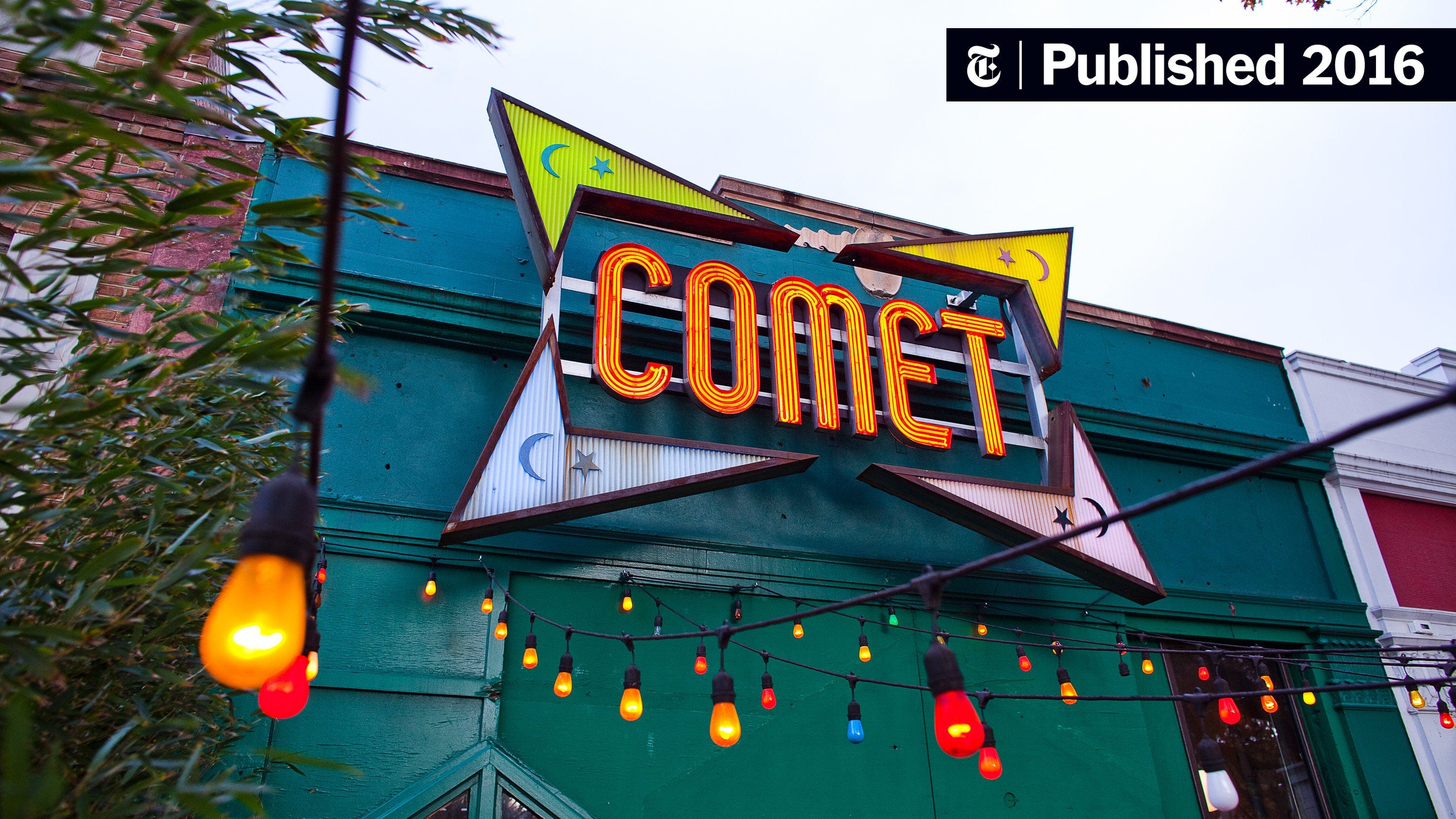
Comet has received critical acclaim from The Washington Post, The Washingtonian, and the New York magazine, in which it was featured as one of the most popular pizza houses in Washington, describing the restaurant as a “hipster-heavy pizza parlour”.
With a significant patronage and busy atmosphere, it is hardly the ideal location for any illegal activity, particularly not secret meetings involving the mass trafficking of children.
Immediately, typical conspiracy theory traits were woven into the story, most notably that Comet Ping Pong was a hub for secret satanic rituals and child abuse.
The first ever post peddling this claim came via an anonymous account on the online site Reddit, which stated: “Comet Pizza is a pizza place owned by James# Alefantis, who is the former gay boyfriend of David Brock, the CEO of Correct The Record. It has been the venue for dozens of events for the Hillary campaign staff. John Podesta has had campaign fundraisers there for both Barack Obama and Hillary Clinton. John’s brother and business partner, Tony Podesta, has his birthday party there every year. It’s also a dive that, according to reviews and photos, has hidden bathroom doors and creepy murals. The bathrooms in particular have murals exclusively of nude women, as well as a great deal of graffiti relating to sex. Reviews of the restaurant are bizarrely polarised. Websites describing it positively note that there are regularly ‘unsupervised children running around’. Their menu includes a paedophilic symbol, as do the signs and decorations of other neighbouring businesses. The music acts and the posters promoting the same acts are bizarre in their presentation, content, and lyrical focus, but are still promoted as being ‘for all ages.’ The overtly sexual content would suggest otherwise. The same has taken place in reference to videos recorded inside Comet Ping Pong by people who frequent their establishment, as well as videos referencing Comet Ping Pong positively from the exterior. While initially not the central focus of the investigation at the onset, Comet Ping Pong is a much more overt and much more disturbing hub of coincidences. Everyone associated with the business is making semi-overt, semi-tongue-in-cheek, and semi-sarcastic inferences towards sex with minors. The artists that work for and with the business also generate nothing but cultish imagery of disembodiment, blood, beheadings, sex, and, of course, pizza”.
This entire ‘review’ was, of course, entirely fictional and intended to stir up further accusations against what was, and still is, a perfectly normal, popular pizza joint.
And it worked. The post went viral, was elaborated on and sensationalised further through social media accounts with larger follower counts, and – seeing an opportunity to help demonise Trump’s opponents - amplified to the masses by Trump-supporting conspiracy theorists and pundits such as Alex Jones.
The end result was that James Alefantis and practically anyone associated with him began receiving thousands of death threats, a long list of innocent politicians and celebrities were forced to leave social media after being targeted, and a lone gunman strolled into Comet Pizza on that now-infamous sunny morning.
Eventually, Pizzagate began to die down and was overshadowed by other conspiracy theories. Yet by this time, QAnon, a widespread pro-Trump conspiracy movement and a direct ‘spinoff’ of Pizzagate, was gaining significant support from hundreds of thousands of people, mainly fervently Christian Republicans.
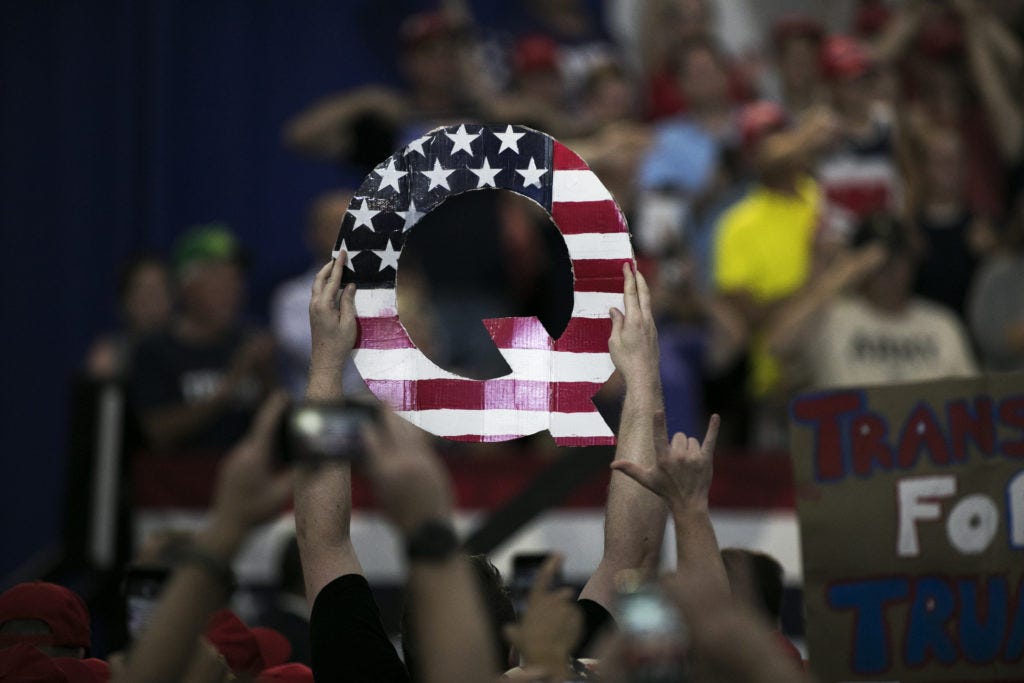
Seeing the popularity and effectiveness of Pizzagate, QAnon, whose followers were led to falsely believe it was led by ‘Q’, a senior military insider trying to expose child trafficking and ‘the deep state’, rehashed it, embellished it further, and pushed it back into the mainstream through its large support base on 4Chan. And it mainly did this by referring to the original source. Soon, the hashtags #Pizzagate and QAnon began trending around the world on social media platforms. The narrative was the same – an elite global pedophile ring was operating out of America. It consisted, so they claimed, of leading Democrats and their celebrity supporters such as Tom Hanks - essentially anyone who had been outspoken in their opposition to Donald Trump’s presidential bid and thus were considered by Trump’s fans and spin doctors as ‘in need of smearing and discrediting’). But now the conspiracy movements had been handed the perfect poster boy, ‘proving’, in their eyes, that their belief in the existence of such a vile child-trafficking group was true. That poster boy was Jeffrey Epstein, who, luckily for them, had indeed once been friends with Bill Clinton, the husband of their arch nemesis.
QAnon supporters can often be found to display mottos or slogans in their social media account bios: ‘WWG1WGA’ (Where We Go One We Go All), ‘Redpilled’, ‘Truther’, ‘adrenochrome’, or simply the letter ‘Q’. Dangerous in many ways, QAnon has inspired terrorism, including recent extreme-right terrorists such as Tobias Rathjen, who carried out the Hanau shisha bar killings in Germany in February 2020 and wrote in his manifesto and suicide note that he believed the conspiracy theory that ‘satanic elites rule the world and traffic children’.
An FBI Intelligence Bulletin memo from the Phoenix Field Office dated May 30th, 2019, identified QAnon-driven extremists as a domestic terrorism threat, the first time a fringe conspiracy theory had been labelled as such. The memo cited several arrests related to QAnon, some of which had not been publicised before: “The FBI assesses these conspiracy theories very likely will emerge, spread, and evolve in the modern information marketplace, occasionally driving both groups and individual extremists to carry out criminal or violent acts.
Spread it they did, with the movement influencing millions of curious social media users across the planet. Trump, they insisted, was the saviour who would destroy the elite Democrat-run paedophile rings plaguing America.
Realising how beneficial the disinformation was in demonising his opponent, Hillary Clinton, some of Trump’s key online promoters actively promoted it.
“A series of individuals posing as a high-level government officer called Q have been leading hundreds of thousands of Americans into a matrix of esoteric conspiracy theories, fantasies, and promises of an ultimate victory for Trump against all his enemies”, said journalist Georgi Boorman. “Q promises that Trump will ‘drain the swamp’ and round up thousands and thousands of corrupt government officials and paedophiles and, along with Hillary Clinton, they will be locked up. Q promises a LOT of things, including that the truth will win out – that I agree with; Q is not to be trusted, and neither are any of the people promoting Q as a source of truth or hope for our country. Q has offered failed predictions multiple times. The very first Q post, on October 28th, stated that Hillary Clinton’s passport would be flagged on October 30th, 2017, and that her extradition was already underway. That didn’t happen. Q said to expect riots on that day. They never appeared. Q said the future proves the past, but futures that didn’t happen simply proved Q’s lies. Q also said that November 3rd and 4th, 2017, would ‘deliver on the MAGA promise’ and that the President would clean house and demonstrate his authority. Nothing happened. Then Q said that on November 3rd, a state of temporary military control would be instituted and special ops carried out. Q warned about organised public riots and the initiation of the emergency broadcast system. Do you recall any of this happening, or did we conveniently get sucked into a parallel universe right before Q’s shocking prediction came to fruition?”
But Q’s demonstrably false claims and predictions didn’t stop the movement from not only growing, but growing stronger and more fanatical. Millions of online pseudo sleuths and conspiracy loons had broadened the witch hunt. The Podesta brothers were bizarrely accused of being the kidnappers of British child Madelaine McCann. Any celebrity who had voiced so much as a slightly negative opinion of Donald Trump was instantly branded a paedophile, their name beginning to appear on fake versions of Epstein’s flight logs and photoshopped versions of his black book. Epstein quickly became the movement’s primary focus.
On November 2nd, 2016, the broadcast of InfoWars (arguably the most influential conspiracy theory outlet in the country, with 7.7 million unique visitors to its website a month, Alex Jones asked pseudo-investigator Doug Hagmann to tell his audience what sources had revealed about the emails recovered by officers from disgraced prominent Democrat politician Anthony Weiner’s laptop. “[T]he most disgusting aspect of this is the sexual angle,” Hagmann said. “I don’t want to be graphic or gross here, but based on my source, Hillary did in fact participate in some of the junkets on the Lolita Express [a nickname given to Jeffrey Epstein’s private plane].”
The story took off, even though it was a complete fabrication.
Despite the ongoing scandal surrounding Jeffrey Epstein not being predicted by QAnon or Pizzagate-peddlers, conspiracy theorists continue to use the Epstein case as ‘proof’ to support their already debunked claims, and has drawn further online interest in QAnon, subsequently significantly contributing to the vast and viral streams of disinformation that became ‘official Epstein lore’.
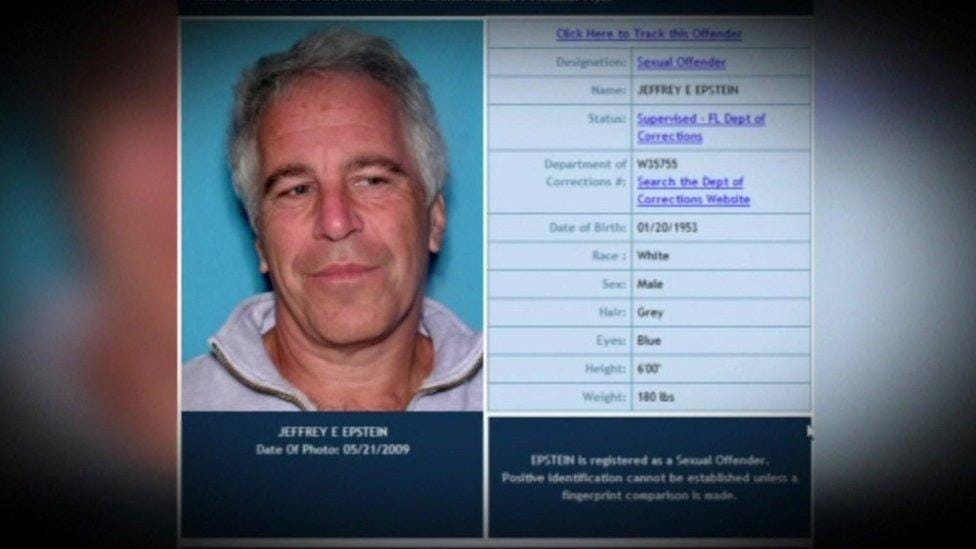
“I definitely see it [Epstein’s arrest] as a moment of vindication,” David Seaman, a chief proponent of the Pizzagate conspiracy theory, told me. “I think this is a turning point.”
“This is just the beginning,” said Liz Crokin, a prominent QAnon devotee. “The storm is officially here.”
“I think I’ve been unnecessarily maligned,” said Mike Cernovich, a right-wing social-media personality who has claimed that almost every A-list actor in Hollywood is a paedophile.
But journalist McKay Coppins stated, “The notion that the Epstein case somehow validates every outlandish assertion uttered by the tinfoil-hat brigade is absurd. But squint at the recent headlines and you’ll see a story—about abuse of power, and elite impunity, and moral rot in the ruling class—that helps explain why a certain breed of conspiracy theorist has gained so much traction in this political moment.”
Mimicking previous conspiracy stories, QAnon supporters began spreading a series of baseless claims, hoax-riddled memes, and – directly copying the debunked allegation in Pizzagate – the belief that a secret subterranean chamber exists beneath a ‘temple’ on Epstein’s private island that Hillary Clinton and other world elites used to secretly traffic and sacrifice children to Satan and to drink abducted children’s blood.
This narrative has become perhaps their most popular conspiracy theory to date, and the long-known fact that Epstein had entertained the Clintons and other celebrities, and the release of his ‘black book’, further fuelled the conspiracy.
Following the suspicious death of Epstein, some influencers within the MAGA movement had been boosting the conspiracy theory that the convicted sex offender was somehow killed by Bill Clinton.
This was far from the only theory to spread about the Epstein case. Opponents of Trump, for example, used the hashtag #TrumpBodyCount to imply that the President was involved in Epstein’s death to cover up his own alleged involvement.
Meanwhile, fake flight logs and ‘Epstein client lists’ began to go viral on social media, including the names of senior Democrats, their influential supporters, and any famous actor or TV host who had publicly criticised Trump.
Epstein’s ‘black book’, essentially nothing more than a phonebook containing names of famous and not famous individuals (some of whom Epstein had never even met) was also thrown into the mix, further muddying the waters of the legend of the Client List.
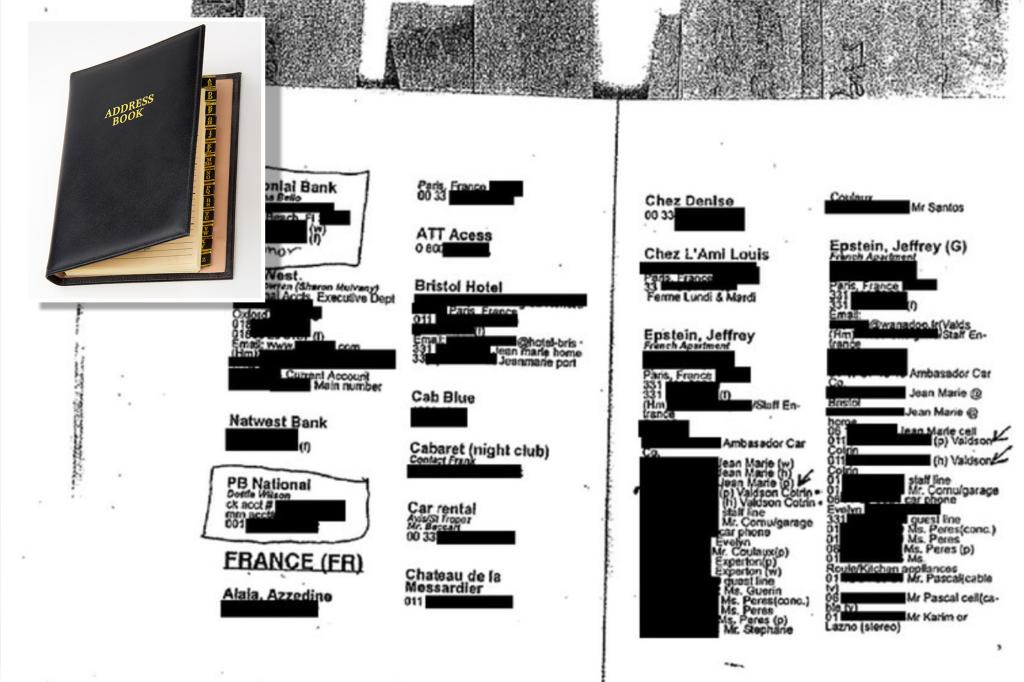
The world - mostly due to the spread of these nonsense claims and theories, but also due to media manipulation of the whole affair and the sensational headlines that flooded in, and still flood in - now truly believes that Epstein had been convicted of running a global child trafficking operation for some of the most powerful men on the planet, and that Ghislaine Maxwell had been his ‘chief recruiter’.
But none of it is true, and the evidence, which will be included in my upcoming book, NAKED LIES: The Epstein Scandal That Rocked The Royals, proves that.
And one inconvenient fact bizarrely remains overlooked: Not a single Epstein accuser has ever claimed to have been trafficked to anyone famous or influential. In fact, they have never claimed they’d been trafficked to anyone other than Jeffrey Epstein. Nor did a single witness during the trial of Ghislaine Maxwell claim that they had been trafficked to anyone other than Jeffrey Epstein.
Except, that is, for serial false accuser Virginia Giuffre.

In the early days of this scandal, seeing an opportunity to draw attention to their own claims of abuse, Virginia Giuffre and Maria Farmer both began tweeting out QAnon slogans such as ‘WWG1WGA’ (‘Where we go one, we go all’), ‘The Great Awakening’, and attempting to attract the online conspiracy theory community, regaling them with baseless tales of elite pedophile rings. Virginia continued to do this just a few years before her death.

Her plan worked. Not only did her tweets go viral, but she became a firm favourite of Qanon followers, and her salacious sex scandal stories, splashing famous faces on front pages across the world, were swiftly assimilated into Qanon lore as vindication that the entire conspiracy theory was based on fact.
You can read how Virginia’s allegations evolved, including evidence proving those allegations to be false, by clicking here.
Virginia claimed she’d been trafficked to foreign presidents (and then admitted under oath that she’d never even met any).
She (falsely) claimed she’d been trafficked to two princes, to Rick Hilton, to Jacques Cousteau’s granddaughter, to famous scientists and politicians, to lawyers and a string of celebrities.
The timing was perfect. The MeToo movement was also in full swing, merging in the public consciousness with QAnon and Pizzagate.
People demanded the release of the Epstein Client List - even joined by Trump Jr who, in a post on Twitter, accused Democrats of being involved and called for the mythical list to be made public.
And they continue to make that demand.
The left-wing are screaming out for the release of the ‘Epstein Files’ in the hope that it will reveal the list and Trump’s involvement in Epstein’s alleged abuse of children (click here to read my article explaining how there is no evidence to suggest Trump had any involvement at all). The right-wing are screaming out for its release in the hope that it will reveal the list and ‘expose’ the Clintons and other Democrats.
But is mixture of disingenuous outrage with political agendas, and genuine misguided anger over a scandal that the public still don’t fully understand.
A viral myth that won’t go away.
A conspiracy theory influenced by its age-old ancestors.
A smear.
A red herring.
And, as Trump now calls it, ‘a hoax’.
This is very well written. It goes through timeline and history up to the modern day and explains how people were manipulated with false information then and how it continues today. Enphasis on Movements like QAnon and Meetoo who continue to influence views by spreading lies and misinformation via social nedia, with reference also to the widely used "Pizzagate conspiracy theory" It's very interesting at the end and quite shocking how the Medias selective coverage over Epstein, has covered up the truth about Epstein and compulsive liar Virginia guiffre. Regards the false allegations against @potus and the lefty looneys of the Denocrats demanding with Faux outrage to release the Epstein files Quoting Jay " But is mixture of disingenuous outrage with political agendas, and genuine misguided anger over a scandal that the public still don’t fully understand " I Look forward to @jay_beecher book . It seems we only have one real journalist who has previously worked for the @DailyMail @DailyMirror who is willing to expose the REAL Epstein scandal
Fastest way to tyranny is by inciting moral panic. Reminds me of the drug panic in Southeast Asia, where vigilante groups sometimes abduct and murder suspected drug users/traffickers, often with the tacit approval of the government (and the public).