
Police Drop Inquiry Into Prince Andrew Bodyguard Allegation After Finding 'No Evidence of Criminal Acts or Misconduct'

British police have confirmed they will take no further action over claims that Prince Andrew sought to use a taxpayer-funded police protection officer to gather information about his accuser, Virginia Giuffre, concluding that there is no evidence of criminality or misconduct and no basis on which to open a formal investigation.
The Metropolitan Police said it reviewed material relating to reports that, in 2011, the Duke of York allegedly passed personal details about Giuffre to a police officer assigned to his protection, with the suggestion that the officer was asked to make discreet enquiries about her. After assessing the available information, the force said its evaluation “has not revealed any additional evidence of criminal acts or misconduct,” adding that there was no new material that would justify police action. The decision brings to an end years of intermittent speculation around the claim and leaves Andrew facing no police inquiry on the issue.
The conclusion comes against the backdrop of renewed public debate following the death of Virginia Giuffre, one of Jeffrey Epstein’s most prominent accusers, and amid continued scrutiny of how aspects of her allegations were reported, repeated and, in some cases, later contradicted by her own sworn testimony. While Giuffre’s family and supporters have expressed anger at the police decision not to pursue the bodyguard allegation, the Metropolitan Police stressed that it remains open to reconsidering its position should credible new evidence emerge.
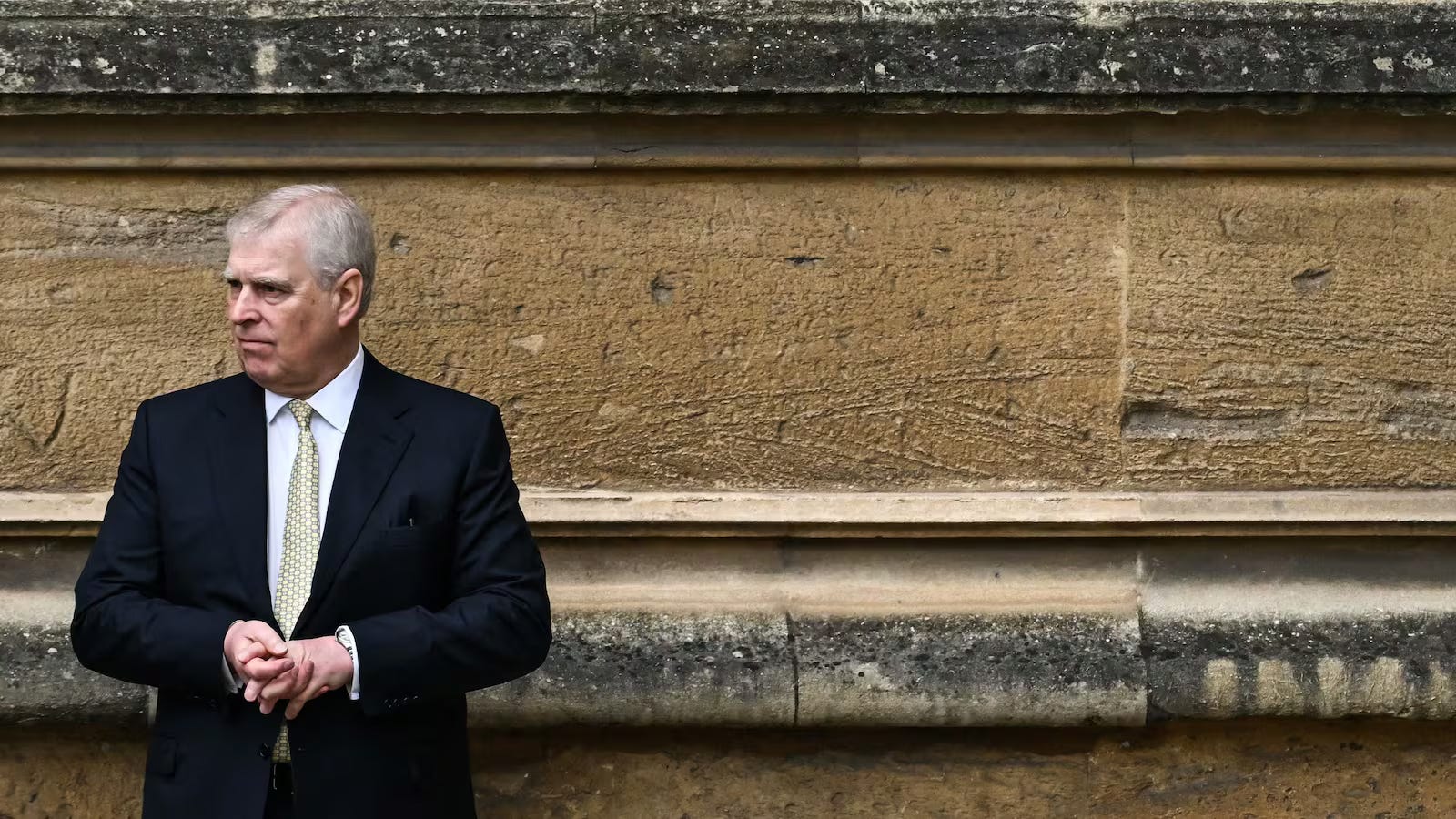
Andrew has consistently denied wrongdoing. He has never been arrested or charged in relation to Giuffre’s allegations and settled a civil lawsuit brought by her in New York in 2022 without admitting liability. The settlement, while ending the case, did not involve any finding of fact by a court. The police decision not to act on the bodyguard claim underscores a central feature of the wider scandal: that many of its most explosive elements have unfolded not in criminal courtrooms, but in the media, where allegation, repetition and assumption often ran far ahead of sworn evidence.
Over the past several years, close examination of the sworn record has revealed a far more complex and, at times, contradictory picture than the one that dominated headlines. Away from social-media soundbites and campaign slogans, Giuffre’s own testimony under oath materially diverged from some of the claims that propelled her story into the highest realms of international political scandal.
Among the most consequential was her assertion that she had been trafficked to foreign presidents. That claim circulated widely for years, lending the Epstein scandal a global, geopolitical dimension and positioning Giuffre as a victim not only of wealthy individuals but of heads of state. Yet in a 2016 deposition, given under oath and subject to penalties of perjury, Giuffre stated that she had never met any foreign presidents. The statement was unambiguous. It did not qualify or soften earlier accounts; it directly negated a central allegation that had been repeated as fact across much of the media landscape.
A similar reversal emerged in relation to New Mexico. In her unpublished memoir manuscript, The Billionaire’s Playboy Club, Giuffre wrote that she had sex with Prince Andrew at Jeffrey Epstein’s ranch in New Mexico. The specificity of that claim mattered. It extended the alleged abuse beyond London and New York, placed Andrew at Epstein’s Zorro Ranch, and accused Epstein and Ghislaine Maxwell of trafficking her there for that purpose. The episode entered the folklore of the case, cited as evidence of a sprawling, multi-state pattern of abuse.
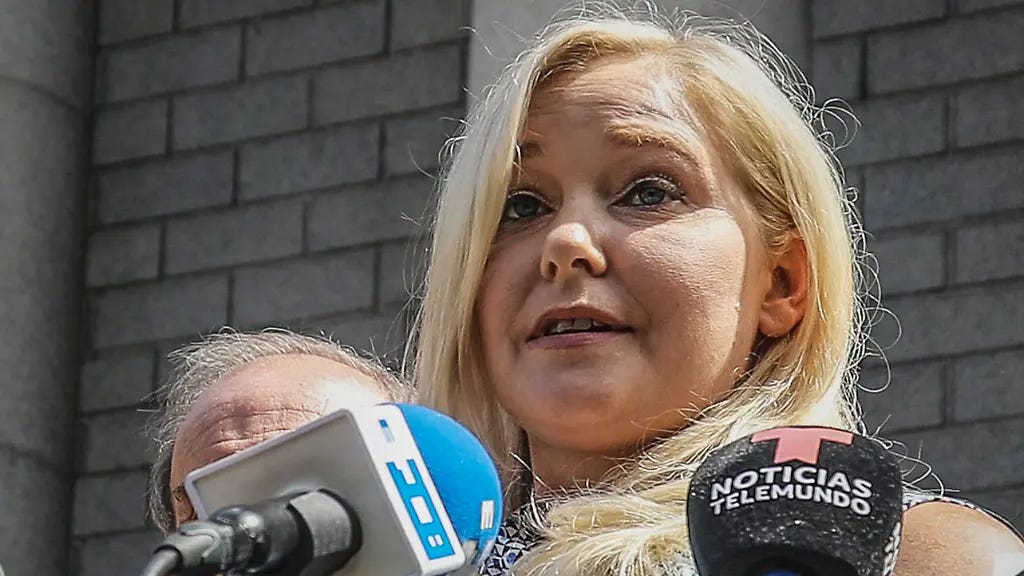
Yet, again under oath in 2016, Giuffre admitted that the New Mexico encounter never happened. She conceded that she had fabricated the claim. The admission passed with remarkably little scrutiny at the time, despite its significance. It was not a peripheral correction or a lapse of memory. It was the withdrawal of a core allegation, made only when the legal consequences of a false statement became unavoidable. In doing so, Giuffre acknowledged that she had falsely accused Epstein and Maxwell of trafficking her to New Mexico and falsely accused Andrew of being the beneficiary of that alleged trafficking.
These sworn reversals sit uneasily alongside the certainty with which the same claims were reported and repeated for years. They also form part of the broader context in which police decisions, including the Metropolitan Police’s conclusion on the bodyguard allegation, must be understood. Law enforcement agencies are bound not by volume of repetition or intensity of public feeling, but by evidence capable of meeting legal thresholds.
The picture becomes still more troubling when examining Giuffre’s own admissions and writings about her role in recruiting underage girls for Epstein. By her own account, set out in her unpublished memoir and corroborated by witness testimony, Giuffre acknowledged that, once she was over 18 and a legal adult, she actively participated in grooming and recruiting schoolgirls for Epstein, motivated by money and uncoerced by force.
In The Billionaire’s Playboy Club, she referred to these girls as “easy commission.” She described stalking the streets and school corridors of Palm Beach in search of vulnerable teenagers she could manipulate and deliver to Epstein. According to her own account, she dressed them in what she called “more adult, more revealing” clothes, applied makeup to them, plied them with drugs, and drove them to Epstein’s home. On the way, she instructed them that if Epstein or any member of his household staff asked their age, they were to lie and say they were over 18.
This was not, by her own description, an isolated incident. Tony Figueroa, Giuffre’s former long-term partner, told me in an interview that she recruited “around two new girls a week.” His account aligns with patterns described by several women who later came forward, describing similar approaches, assurances and instructions.
One of those girls was Carolyn Andriano. At the time, she was an underage schoolgirl when she was approached by Giuffre, who was already an adult. Andriano was peer-pressured by Giuffre into taking drugs and offered what was framed as easy money. All she was told she would have to do, Giuffre assured her, was give a massage to “some old rich guy.” Hesitant at first, Andriano agreed, reassured by another woman who made it sound as though everything would be safe.
Giuffre drove her to Epstein’s home in West Palm Beach. On the way, she repeated the instruction: if anyone asked, she must say she was over 18. Once there, according to Andriano, Giuffre led her upstairs, told her to undress, and made her watch as she engaged in sexual activity with Epstein in his massage room before coercing her to join in.
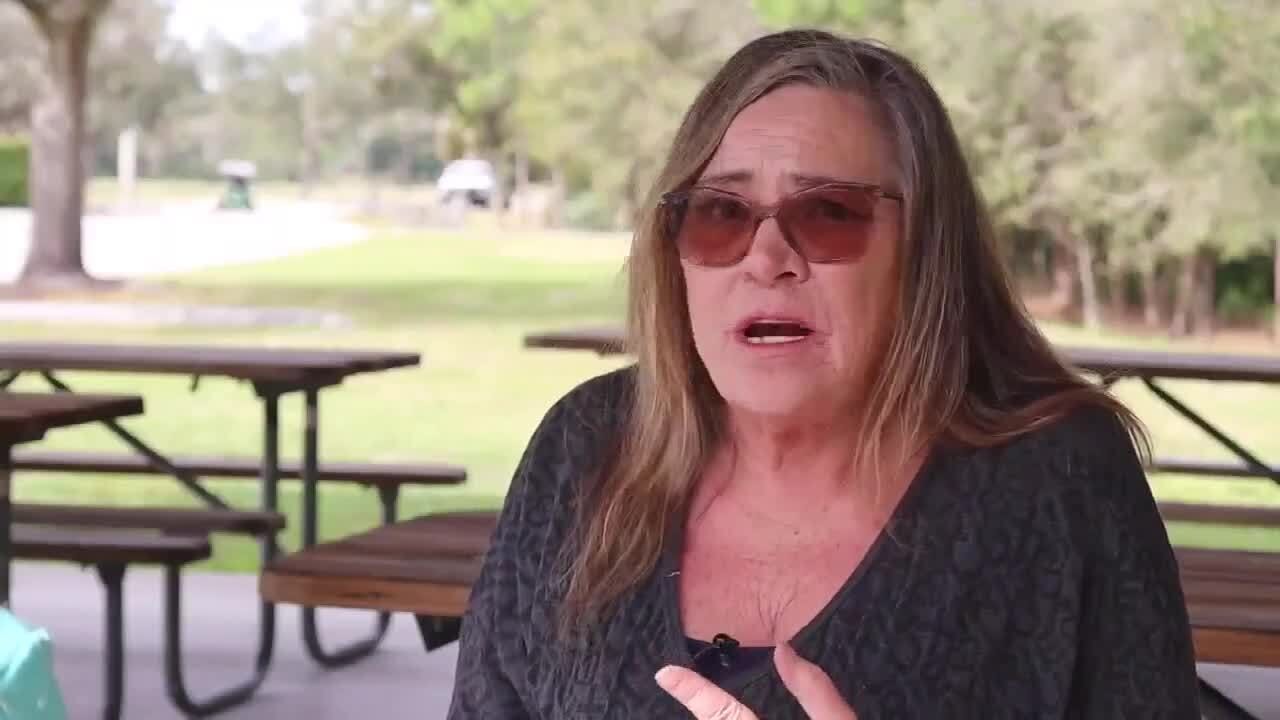
Dorothy Groenert, Andriano’s mother, has been blunt in her assessment of Giuffre’s role. In interviews conducted before Giuffre’s death, Groenert rejected the idea that her daughter’s experience could be reduced to a story of victimhood without agency on the part of the recruiter. “She abused my daughter!” Groenert told me. “She should be behind f*cking bars!” In another interview, she said: “She victimised my daughter. She was the one who recruited my daughter, knowing what the f*ck she was involved with, what she was doing, and knowing it was wrong.”
Despite these accounts, and despite Giuffre’s own admissions about her role in recruiting underage girls, no criminal investigation into her actions was ever opened. Before her death, some victims and their families publicly called for police to examine her conduct as a recruiter. That never happened. She was never charged, questioned under caution, or formally investigated for those acts, even as others around Epstein were prosecuted or sued.
Giuffre’s death, which occurred amid mounting personal pressures and renewed scrutiny of contradictions in her story, has frozen many of these questions in place. Supporters describe her as a victim driven to despair. Critics argue that her death has had the effect of closing off overdue examination of her own conduct and credibility. What is beyond dispute is that key elements of her public narrative were contradicted by her sworn testimony, and that her admitted role in recruiting underage girls was never tested in court.
Against that background, the Metropolitan Police’s decision to close the book on the Prince Andrew bodyguard allegation is less anomalous than it may appear at first glance. Police did not assess Andrew’s character or the morality of his associations; they assessed whether there was evidence of a crime. They found none. In doing so, they implicitly reaffirmed a principle often lost in the noise surrounding the Epstein scandal: that allegations, however frequently repeated, are not evidence, and that reversals under oath matter.
The broader reckoning with how this case was reported, amplified and understood is still unfinished. For years, some of the most sensational claims were treated as settled fact, even as sworn testimony quietly dismantled them. Others, including admissions of criminal conduct by an adult recruiter of minors, passed with little interest from law enforcement or the press.
The police decision means that Andrew will not face questioning or charges over the bodyguard claim. It marks another moment where the evidentiary record has asserted itself over narrative momentum.
As the dust settles, the unresolved issue is not why police declined to act in the absence of evidence, but why so much attention was lavished for so long on claims that collapsed under oath, while other admissions, this time levelled against Giuffre and equally as grave, were never investigated at all.