
Meet the Fake 'Friend of Ghislaine Maxwell' Who Duped Piers Morgan and the BBC - And What Her Story Teaches Us About the Mainstream Media
Never let the truth get in the way of a good story...

For years, Laura Goldman drifted through the Epstein–Maxwell narrative like a figure out of fog: half-seen, self-declared, quoted everywhere, believed by many, verified by almost no one. When Ghislaine Maxwell fell from her Manhattan perch in 2020 and the world began groping for answers, Goldman stepped forward with the ease of someone who had already rehearsed the role. She called herself a friend. A confidante. A woman who knew Ghislaine’s mind. And remarkably, an entire global press ecosystem took her at her word.
It didn’t matter that her background contained red flags bright enough to light a runway. It didn’t matter that her claims shifted with each interview. It didn’t matter that those who actually knew Ghislaine had never once heard her name. The media wanted a colourful insider, and Goldman — with her rasping voice, unverified anecdotes and taste for theatrical phrasing — slid neatly into the vacant seat.
What followed was a cavalcade of appearances across some of the world’s most influential outlets. She was quoted in the Guardian as Ghislaine’s “friend.” She appeared on BBC News and Radio 4. Vanity Fair repeated her claims. Piers Morgan interviewed her on air. The Daily Mail published her quotes without hesitation. Newspapers across Europe and the United States ran stories amplifying her voice as though she were one of Maxwell’s inner circle, a woman with privileged knowledge of the most notorious socialite of the century.
None of them bothered to check.
Goldman’s past was not hidden. Court records in the United States show she had been criminally charged with harassment in a case involving a former romantic partner — a long, messy ordeal that dragged through the courts and left a trail of reported instability.
In 1994, several months after her alleged affair with married businessman Thomas Lee was ended by Lee, she began stalking and harassing him, making hundreds of phone calls to him and others. She then falsely accused Lee of raping her and allegedly attempted to extort money from him in exchange for keeping quiet.
In 1995, an exhausted Lee paid Goldman $200,000 after she signed an affidavit attesting that she had not been raped. But then prosecutors said Goldman tried to get more money out of Lee, and that he got the FBI involved.
Goldman was arrested. After posting $10,000 bail, she was told to stay away from Lee, and the judge also ordered her to stay away from another man: Manhattan psychiatrist Peter Kaplan, the stepson of Toys ‘R’ Us founder Charles Lazarus. According to the Boston Globe, Goldman had had a romantic relationship with Kaplan as well, although the judge’s exact reasoning for the order was never revealed.
Goldman has been accused by business associates of fabricating stories and inflating her connections. She sometimes described herself as an “ex-insider,” other times as a “former Wall Street trader,” other times still as simply a woman with powerful friends who whispered to her. Her stories were as fluid as they were dramatic.
But in the chaos of the Epstein scandal, the press wanted characters, archetypes, voices that fit the narrative architecture already formed in public imagination. And Goldman, with her willingness to speak in absolutes, offered a shortcut. She claimed to know things others didn’t. She said she knew what Ghislaine thought. She said she knew what Ghislaine feared. She said she was predicting Ghislaine’s legal strategy, emotional state, plans, and even what Maxwell had supposedly confided to her over the years. She was, she asserted, her close friend.
Her appearances became almost a circuit.
On the BBC, she confidently told presenters that Maxwell was being protected by powerful men. On Piers Morgan’s programme, she claimed Maxwell had “nowhere left to hide,” speaking as though she had direct lines into Maxwell’s private anxieties. Vanity Fair quoted her, asserting she was “in contact” with Ghislaine until the days before her arrest. The Daily Mail published her dramatic declarations with lavish seriousness — that Ghislaine feared dying like Epstein, that Ghislaine was preparing to expose others, that she knew secrets still unrevealed.
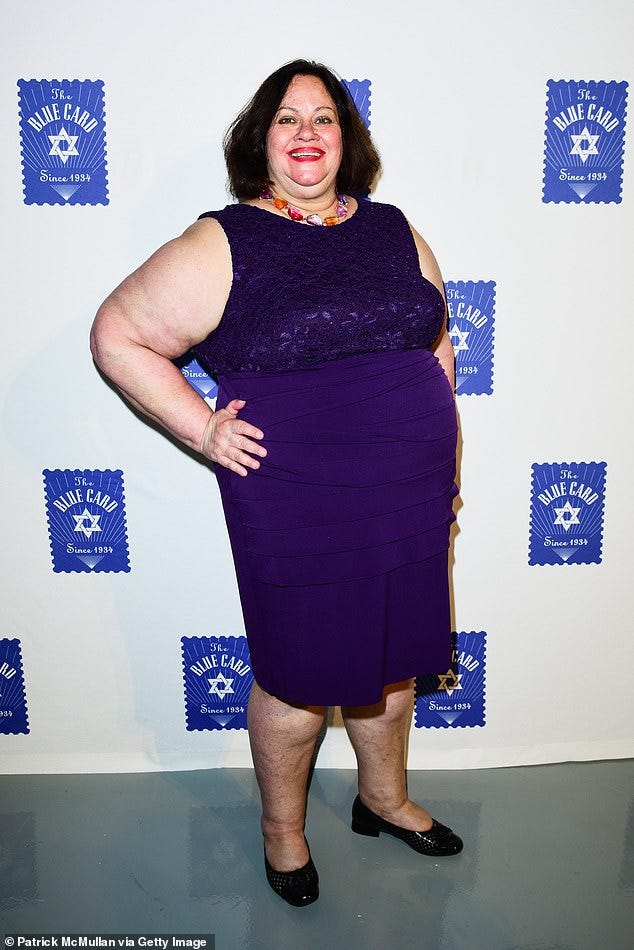
Not a single broadcaster asked for proof of their friendship.
Not a single newspaper requested evidence.
Not a single journalist paused to verify whether the two women had ever met.
Then came the detail that should have dissolved Goldman’s credibility instantly. A member of the Maxwell family — one of Ghislaine’s siblings — told me directly that Ghislaine had “no knowledge whatsoever” of Goldman, had never heard her name, had never met her, and that Ghislaine “was definitely not a friend of hers.” The phrasing carried the firm, clipped finality of someone stating a fact so simple it hardly seemed worth saying. And yet it was devastating: the woman who had been paraded across the world’s media as a “Maxwell confidante” was, in truth, nothing of the sort.
Even more striking was how many individuals who had actually known and interacted with Ghislaine—journalists, socialites, academics, financiers, lawyers—reacted with the same bewildered expression when asked whether they had ever heard of Laura Goldman. Not one recognised the name. Not one recollected her presence at events. Not one remembered her circulating in the Manhattan, Palm Beach or London social spheres where Ghislaine spent her life. Maxwell’s social orbit was sprawling, yes, but it was not infinite. People at that level know each other. And no one knew her.
One business associate, quoted in a U.S. profile, described Goldman bluntly as “a fantasist.” Another called her “completely unreliable.” A third said she “embellished everything.” These weren’t anonymous trolls whispering online — they were people who had worked with her directly.
And yet the global press gave her a megaphone.
She appeared on the BBC and spoke as though she were Maxwell’s designated spokesperson.
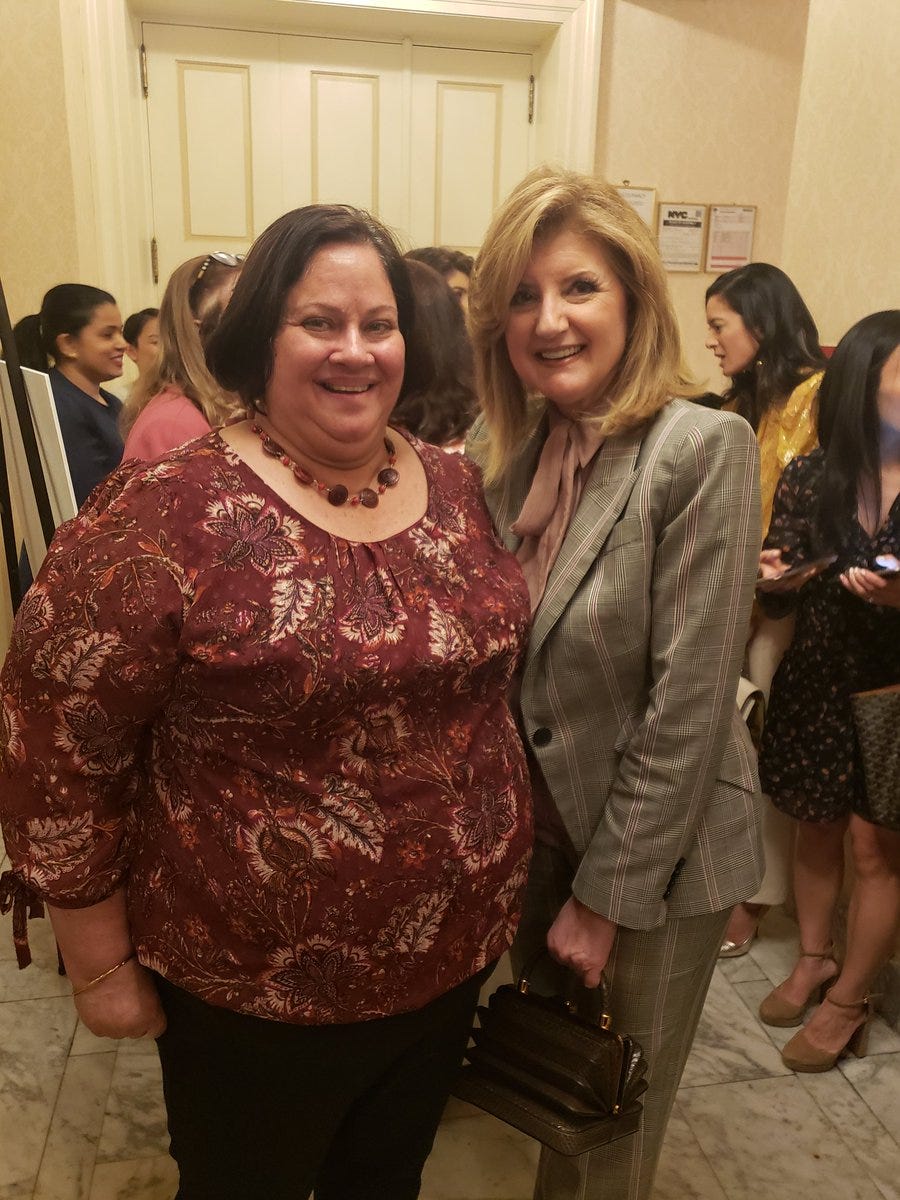
She appeared in the Guardian and dictated what Maxwell supposedly believed.
She spoke to the Daily Mail and diagnosed Maxwell’s emotional condition.
She spoke to Piers Morgan and issued definitive proclamations on Maxwell’s intentions.
She appeared on international programmes predicting where Maxwell was hiding, what she feared, who she would turn on.
A woman with no actual connection to Maxwell at all became, for a period, her most-quoted “friend”.
The error became self-perpetuating. Once one prestigious outlet called her a “friend,” others repeated it, assuming the work had already been done. Snowball journalism. A shortcut here, a blind spot there, and suddenly a myth solidifies into something that resembles truth simply because no one stops to check where it came from.
If they were this sloppy with sources, how could we possibly trust them to factually cover more complex issues, such as the actual allegations against Maxwell?
Journalistic malpractice often hides between the lines, not in what is written but in what is not verified. And in this case, the omission is glaring: none of these outlets ever issued corrections. Not one newspaper. Not one broadcaster. They simply moved on, leaving their audiences with a false impression sealed in print and archival footage.
The great irony is that Laura Goldman did not vanish once the truth emerged. She didn’t retreat. She didn’t correct the record. She simply shifted her angles, appearing on new programmes, making new claims, adjusting her persona as easily as she changed topics. Sometimes she described herself as “close” to Maxwell. Sometimes she said she had spoken to sources near Maxwell. Sometimes she implied Maxwell had confided in her. Sometimes she suggested she possessed insider information too sensitive to publish.
The one constant was that she could never produce proof.
Still to this date, although some newspapers have written about their suspicions that she wasn’t all she claimed to be, none have outed her as a complete fantasist.
Out of curiosity and research, I reached out to Goldman myself. I wanted to hear her explain it. I wanted to know why she had done it. I wanted to ask whether she would admit — calmly, clearly, and with accountability — that she had never known Ghislaine Maxwell at all.
Surprisingly, she answered.
And she did something I genuinely did not expect: she admitted it.
She told me directly that she had not been a friend of Ghislaine Maxwell.
Her earlier public claims, she conceded, were not literal relationships.
Yet even in confession, she wrapped herself in a synthetic cloak of mystique. She insisted she had still been “privy to inside information,” though she declined to offer any specifics. She said she had connections, though none were named. She implied she had been closer to the story than most, though she could not demonstrate how.
But I pressed further. I asked whether she would go on record. I asked whether she would publicly state that she had misrepresented herself repeatedly to global media organisations. I asked whether she would correct the narrative she had helped create. I asked whether she would do an interview, clear the air, and explain her behaviour in her own words.
Her response arrived quickly, with the casual brevity of someone stating the most natural question in the world.
“What’s the pay?”
In those three words, the mystery dissolved.
A woman who had inserted herself — repeatedly, persistently, profitably — into the Maxwell saga was not driven by loyalty, nor truth, nor justice. She was driven by performance. Exposure. Opportunity. Compensation. It was not friendship she had been offering the media; it was a product. It had a price.
And the tragedy — not for her, but for journalism — is that the world’s outlets paid it gladly. Perhaps in money, definitely in airtime, credibility and reach. They amplified her when she gave them the drama they craved. They elevated her when she claimed the insider status they wanted. They published her unverified assertions as fact. And when the truth emerged, they simply turned away, leaving the correction to linger unspoken — an omission that, in its silence, reveals far more about modern media than about Laura Goldman.
yet another addition to the long list of grifters and attention-seekers this story has produced.
One of your paid subscribers, @vanessagr, wrote one of the most damning pieces about Maxwell for Vanity Fair using someone named Christina Oxenberg as a source. Although Oxenberg did barely know Maxwell, Oxenberg originally told Vanessa that the island was wired up for video but then had to change it to the plane was wired up because she didn't know Maxwell past 1997 and Epstein owned the island in 1998.
Oxenberg, a fantastist, later self-published a book where she claimed Maxwell bragged in 2013 about her "new" boyfriend Ted Waitt (Maxwell and Waitt broke up in roughly 2010) and a Ted Talk she gave in 2013 that didn't actually occur until 2014.