
Here's Who Flew on Epstein's Infamous Plane, the 'Lolita Express'
Now reduced to flight logs and speculation, Jeffrey Epstein's private plane has become a key feature in the entire scandal's mythos. But what's fact and fiction - and who really flew on it?

They called it the “Lolita Express” before they even realised what they were naming. The words stuck like a pin in the public imagination, fastening a Boeing 727 forever to a myth so potent that even photographs of the aircraft seem stained by implication. To many, the plane is no longer a machine but a symbol—a white silhouette with a dark reputation, an airborne extension of Jeffrey Epstein’s shadow. But like most symbols, what people think they know is only a fragment of what was real.
For Epstein, and for the dozens—eventually hundreds—who stepped across its metal threshold, the plane was nothing more than transport. Convenient, extravagant transport, yes, but still simply a means of getting from one place to another: Manhattan to Palm Beach, Palm Beach to New Mexico, New Mexico to Paris, Paris to the Caribbean and back again. It spared him the time-consuming trouble of commercial terminals and security lines. It let him lift off unseen and land unannounced. It turned the sky into a private corridor connecting the scattered properties that held his expanding world together.
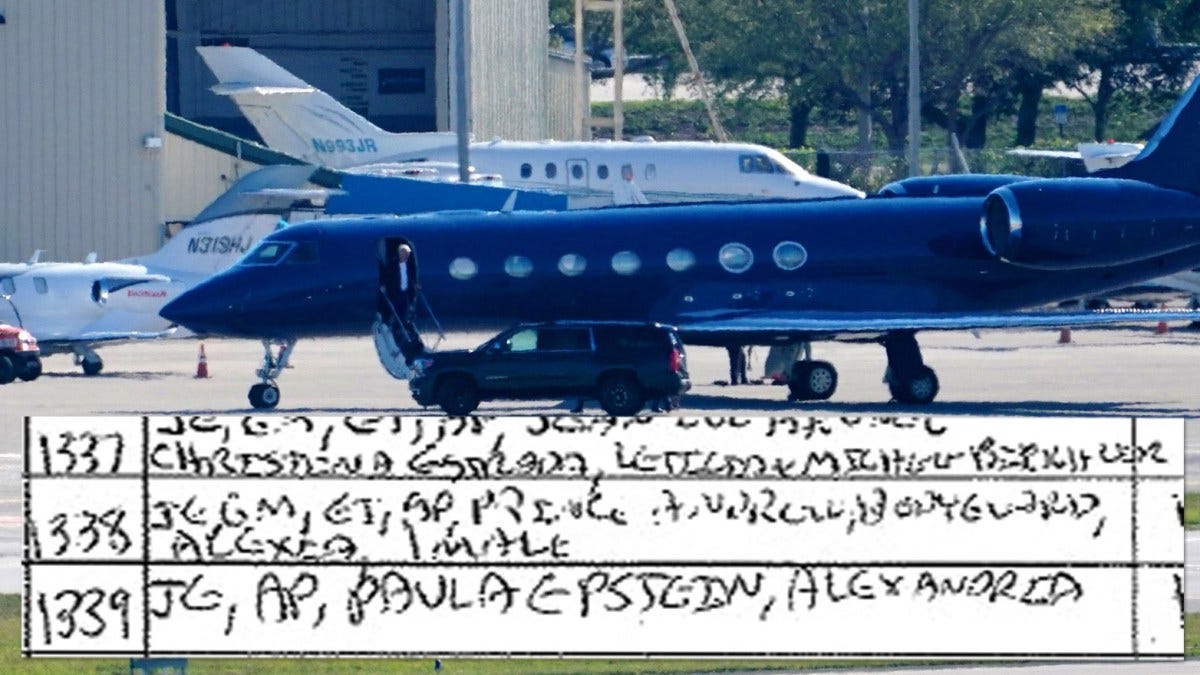
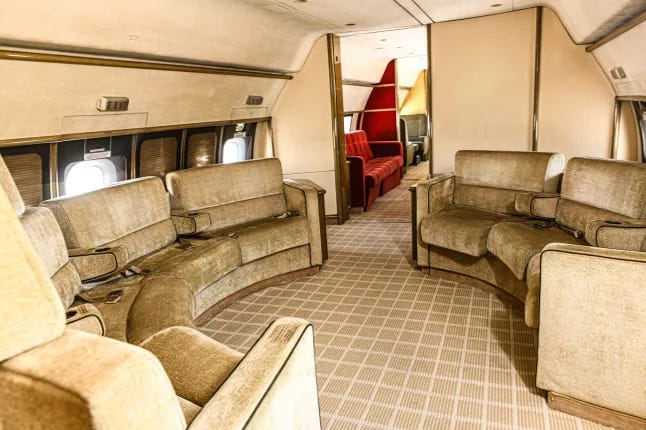
The aircraft itself, tail number N908JE, had a past before it entered his orbit. It had once belonged to someone else, flown commercial routes, done ordinary things. Epstein bought it through JEGE LLC—one of his many faceless companies—and had it refitted in a way that was surprisingly modest. Cream leather chairs, a narrow lounge, a table for quiet work or quiet deals, a sofa that folded into a bed. Nothing like the fantasy some commentators later imagined. No bar carved from exotic wood, no nightclub interior, no mirrored ceilings. The indulgence wasn’t in décor. It was in privacy.
Two pilots kept the plane alive in the paperwork of history. David Rodgers, who flew many of the earlier legs, and Larry Visoski, whose tenure stretched nearly thirty years. Their handwriting is now immortalised in archived PDFs and cold court exhibits: neat lists of passengers, destinations, times, fuel records. They captured everything except the part the world most wants—the truth of what conversations took place once the door sealed and the engines carried them into unmonitored air.
If the logs reveal anything, it is that Epstein’s plane played host to people from wildly different walks of life. Some had no idea who he truly was. Some knew him all too well. Some were staff. Some were guests. Some were young women he surrounded himself with to massage him and satisfy his Hugh Hefner-style lust. Some met him once. Some met him often.
Bill Clinton appears repeatedly. His connection to Epstein emerged from the social-philanthropic network that orbiting billionaires often share. Through mutual donors, shared contacts in banking and academia, and the gravitational pull of the elite New York charity world, Clinton and Epstein crossed paths. On paper, the flights Clinton took—primarily in 2002 and 2003—were tied to humanitarian work. Routes from New York to London, London to Ghana, Ghana to Rwanda, Rwanda to Nigeria. Clinton travelled with advisors, philanthropists, and celebrities enlisted to raise attention for causes the Clinton Foundation was pursuing. The logs show proximity, not complicity. They show how a former president moved across the world quickly, using a donor’s aircraft for multi-country itineraries.
On those same Africa flights appear Kevin Spacey and Chris Tucker. Spacey met Epstein through philanthropic circles and elite social events that crossed over theatre, politics, and finance. Tucker was invited as a goodwill figure whose fame could bring visibility to humanitarian projects. Both flew the same legs as Clinton. Both left the logs afterward without reappearing in any troubling patterns. Spacey, with his flair for spectacle, ended up forever associated with the photograph of him sitting on the throne in Buckingham Palace—snapped during a private tour arranged for the group. Tucker moved on. The logs absorbed their names and then released them back into the world.
Donald Trump’s name appears earlier and in a different context—mid-1990s social adjacency. Trump and Epstein lived near each other in Palm Beach, frequented the same parties, courted many of the same wealthy donors and acquaintances. His flights were short: Palm Beach to Newark, Newark back to Palm Beach. One included Marla Maples and their daughter Tiffany. Another included Eric Trump. These were lifts between social circles that overlapped, nothing more.

Robert F. Kennedy Jr.’s appearances are fewer still—two flights. One tied to his environmental advocacy work, another a family transportation leg. He later acknowledged them openly. No repeating pattern. No deeper entanglement.
Ehud Barak’s presence in the logs belongs to yet another category: intellectual, strategic, investment-driven. Epstein cultivated an aura of access to money, intelligence, and high-level geopolitical introductions. Barak, a former Israeli Prime Minister, met Epstein through discussions about technology and security ventures. He flew into New York on Epstein’s aircraft and appears in at least one Caribbean-gateway leg. He said he never visited Epstein’s island—a point the logs confirm.
Senator George Mitchell appears as well, having met Epstein through political fundraisers and philanthropic gatherings in the late 1990s and early 2000s. His flight segments align with domestic travel between cities where both men maintained business interests. Bill Richardson, then-Governor of New Mexico, appears on routes connected to the state where Epstein owned a sprawling ranch in Stanley. Neither man appears frequently. Both later denied wrongdoing.
Then the financiers emerge.
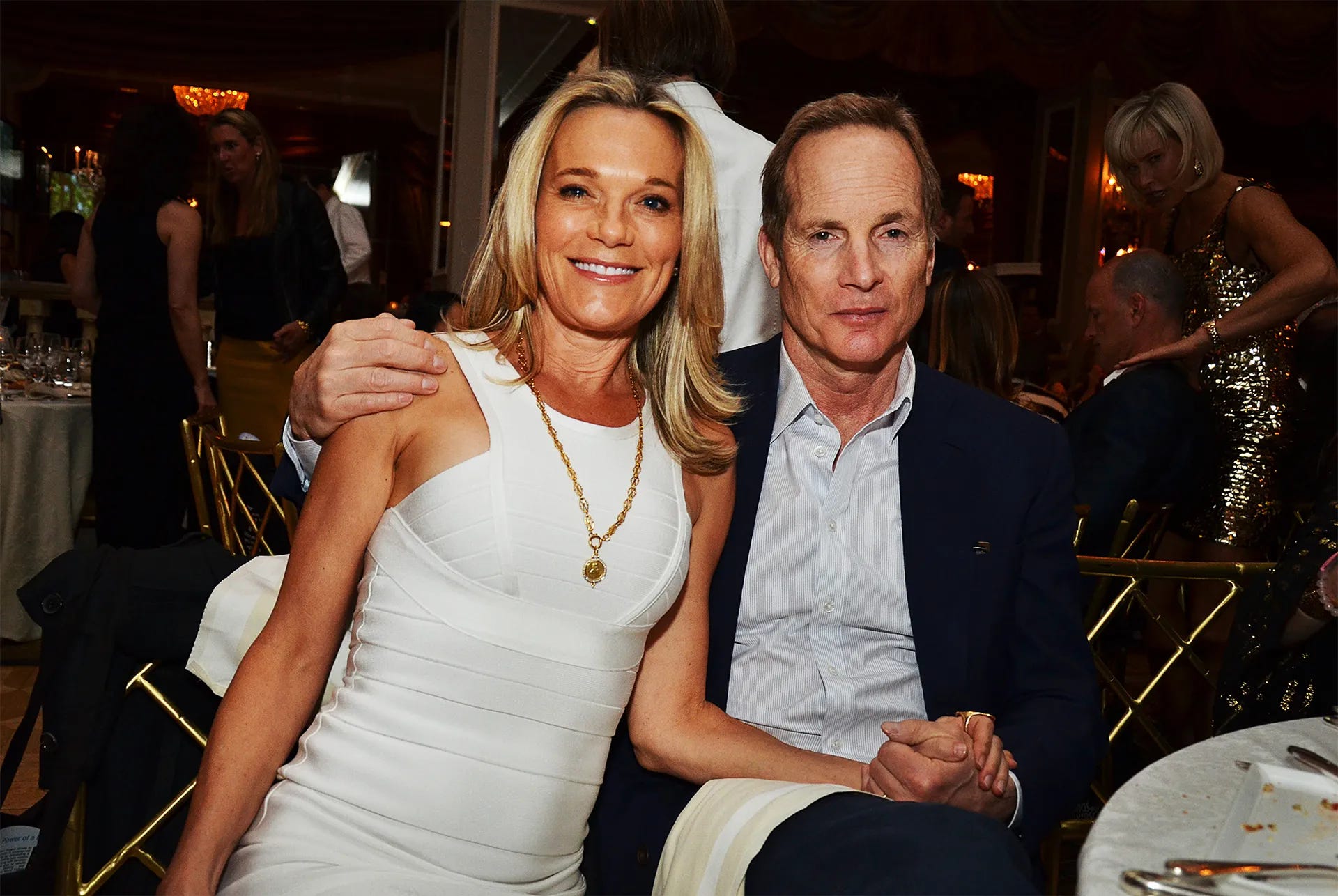
Glenn Dubin and his wife Eva Andersson-Dubin appear often enough to indicate a long-standing social relationship with Epstein and Maxwell. Epstein once dated Eva Andersson before she married Dubin. Their flights include domestic legs from New York, Caribbean gateway routes, and occasional travel tied to philanthropic events. They were part of the Manhattan elite Epstein cultivated—a tight constellation of wealth, influence, and favour-trading.
Leon Black, co-founder of Apollo Global Management, appears in Epstein’s orbit through business rather than friendship. Epstein pitched himself to Black as a financial fixer capable of solving complicated tax structures. Their relationship later imploded into scandal, costing Black his position at Apollo. But in the logs, his trips align with meetings in New York, Palm Beach, and occasionally Europe—business-driven, never personal.
Ron Burkle, another billionaire investor known for political fundraisers and philanthropic work, appears in reconstructed logs on domestic and transatlantic flights. Epstein sometimes offered his plane to acquaintances as a favour, a networking gesture, or a quiet means of travelling without public recognition.
Naomi Campbell appears multiple times. Epstein and Maxwell both mingled in fashion circles, and Campbell’s charity work intersected with their events. A flight toward the Virgin Islands appears in the records, though nothing in the manifests proves she ever landed on Epstein’s island. Her connection was glamorous, fleeting, and social.
Courtney Love appears once. A short hop she later said she accepted as a convenience. Itzhak Perlman appears on a charity circuit leg, having been invited to perform at philanthropic events hosted by Epstein’s associates. David Copperfield appears occasionally—again, part of the celebrity atmosphere curated around dinners and fundraisers.
But the logs contain far more names than these.
A deeper trawl, cross-referenced against public reports and deposition materials, reveals a long list of passengers who boarded Epstein’s plane at least once. Many were connected through philanthropy, finance, politics, or Epstein’s cultivated image as a wealthy donor and problem-solver. Each arrival had its own logic, and each can be explained away as people accepting the offer of flying on a private jet and heading on a journey in style rather than queuing up in an airport (and who wouldn’t accept such an offer?).
Lawrence Krauss, a theoretical physicist, appears on trips linked to scientific conferences funded by Epstein. Epstein, who was obsessed with the appearance of intellectual legitimacy, often invited scientists to conferences at his New Mexico ranch or to gatherings in New York. These flights included routes such as New York to Santa Fe or Santa Fe to Palm Beach.
Stephen Hawking was flown by Epstein’s associates—using a different aircraft—to the US Virgin Islands for a scientific conference hosted by Epstein in the mid-2000s. Though Hawking appears more in social documentation than flight logs, his participation in Epstein-funded science events underscores the reach Epstein had in the academic world.
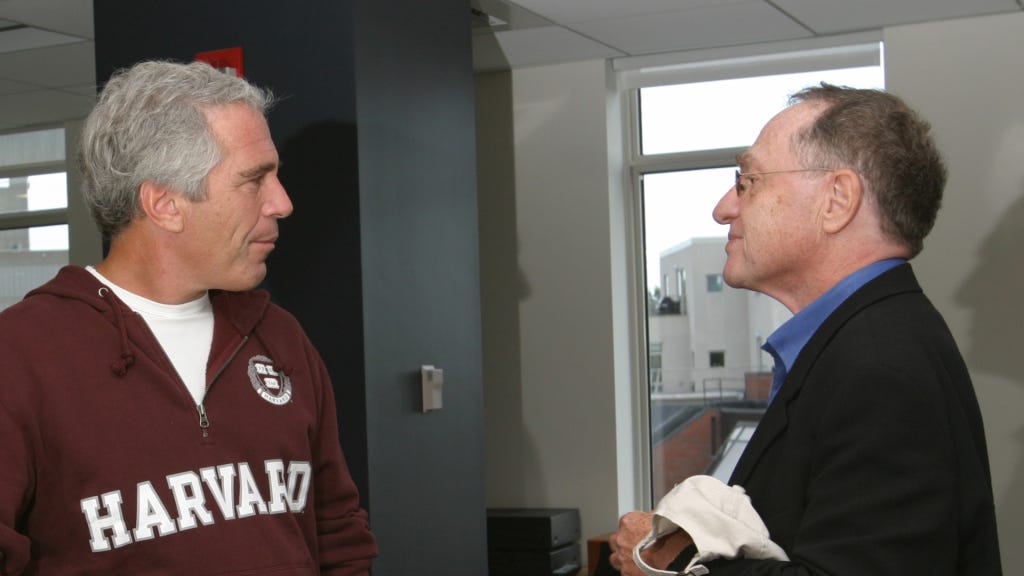
Professor Alan Dershowitz, Epstein’s former legal advisor, appears repeatedly in logs connected to New York, Palm Beach, and occasionally to Boston or Washington. Dershowitz later said he flew frequently because he was part of Epstein’s legal team, and his flights do align with stretches of legal correspondence and property visits.
Prince Andrew’s name appears less frequently than some assume, but he does appear in travel documentation overlapping with Epstein’s properties and his social calendar. His travel was often arranged unofficially through Epstein’s network, and not every trip appears in Rodgers’ surviving logs. His known flights include travel between New York and Palm Beach during the early 2000s when he stayed at Epstein’s Manhattan townhouse.
Ghislaine Maxwell appears frequently, as she was, after their brief dating period, essentially his friend and 'chief of staff'.
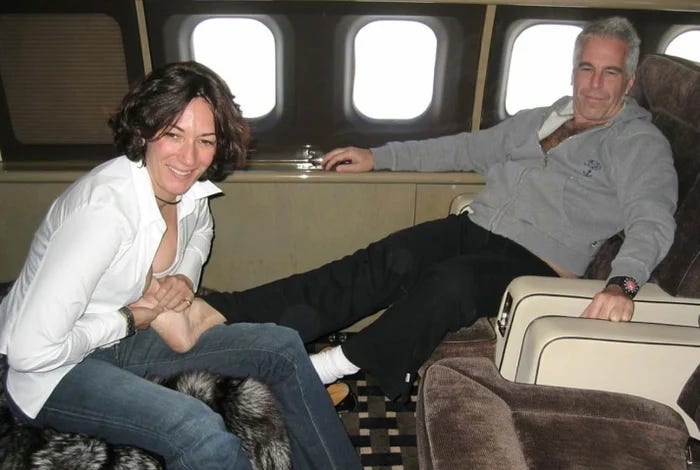
Ghislaine’s friend, the British socialite Nicole Junkermann, appears on European and American flight logs connected to gatherings Epstein hosted around technology investment and philanthropy. She moved in circles that overlapped with elite entrepreneurship and was known for facilitating introductions between wealthy investors.
Jean-Luc Brunel, the French modelling agent later accused by numerous women of abuse, appears on multiple manifests bound for the US Virgin Islands and New York. His presence aligns with periods during which Epstein is alleged to have used Brunel’s modelling agency connections to recruit attractive women.
Emmy Tayler, Maxwell’s former assistant, appears on numerous domestic and Caribbean legs. Her job involved organising travel, scheduling appointments, and sometimes accompanying young women enlisted by Epstein and Maxwell.
Sarah Ferguson, the Duchess of York, appears in social records connected to Epstein’s circle, and while not always explicitly listed on the Boeing 727 manifests, she attended events coordinated by Epstein and received financial assistance from him. Her travel overlaps indirectly with his aircraft movements.
The Harvard professor Marvin Minsky appears in logs for scientific gatherings in which Epstein attempted to portray himself as a curator of intellectual brilliance. These flights typically ran between Boston and New York or between Boston and New Mexico.
Countless anonymous initials appear as well—H, L, A., “Female,” “Girl,” “Staff,” “Assistant.” Many later corresponded to individuals who came forward in depositions. Others remain unidentified. All were adults, debunking the plane’s later nickname, for there is no evidence that any ‘lolitas’ ever stepped foot on it.
Then come the staff: pilots deadheading home, flight attendants rotating between Epstein’s properties, masseuses flown in for appointments, cleaners, assistants, chefs, security. Their travel patterns stretch like threads connecting one property to another. A flight from Teterboro to Palm Beach might include an assistant who needed to prepare Epstein’s house before he arrived. A flight from Santa Fe to New York might include staff carrying paperwork or luggage back to Manhattan. The logs reveal an infrastructure that functioned like a private airline dedicated solely to Epstein’s whims.
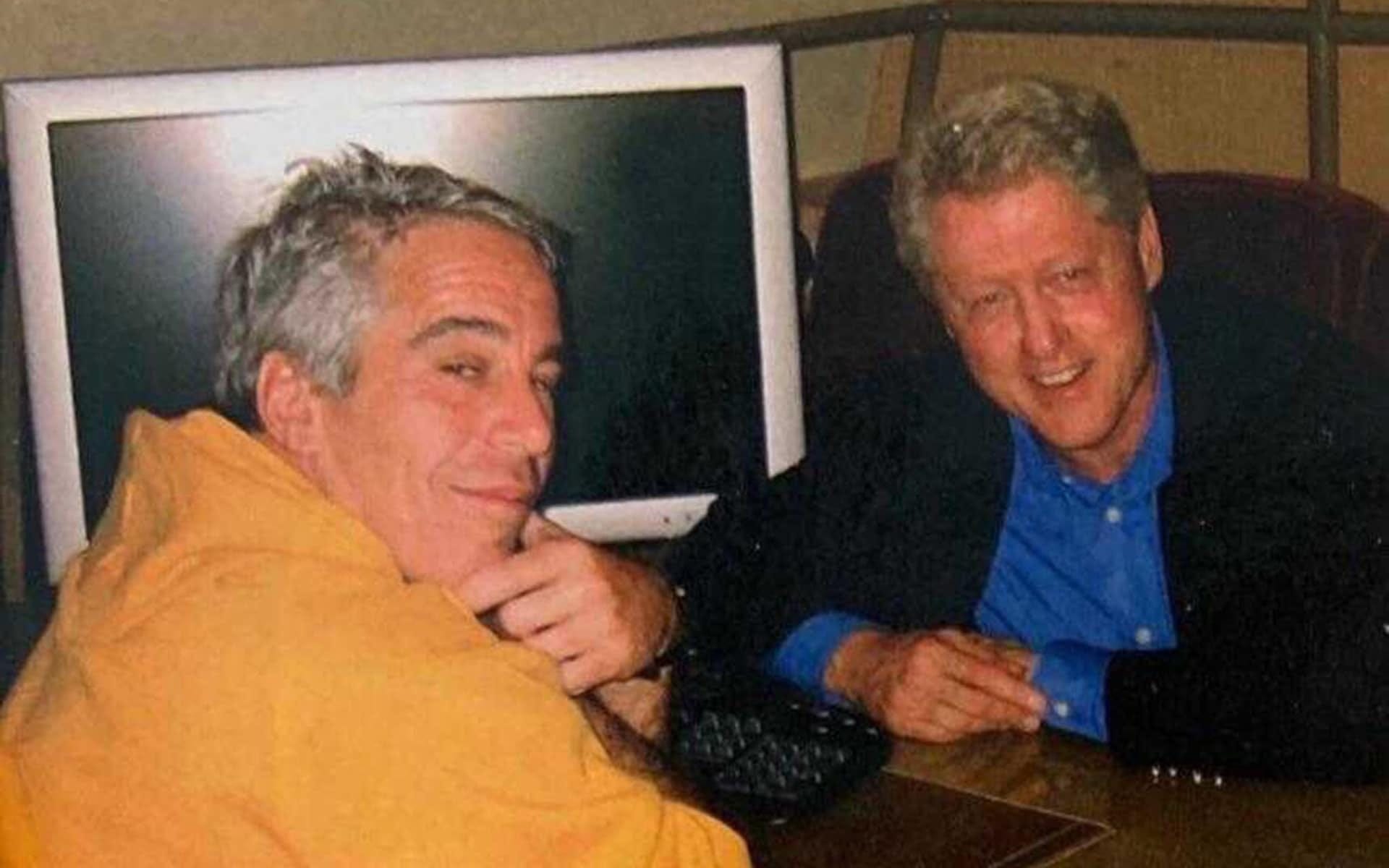
The list of people who flew on Epstein’s aircraft in all publicly available logs now extends into the dozens. Clinton, Spacey, Tucker, Trump, RFK Jr., Barak, Mitchell, Richardson, Dubin, Andersson-Dubin, Black, Burkle, Campbell, Love, Perlman, Copperfield, Dershowitz, Minsky, Brunel, Junkermann, Maxwell, Marcinkova, Kellen, Groff, Tayler, and numerous unnamed women. Each arrived through different pathways—through philanthropy, politics, finance, modelling, academia, law, staff work, or exploitation. Each left a trace in that narrow column of their name, frozen forever in a pilot’s handwriting.
You can view the flight logs here.
The public imagination, as the result of journalists intentionally exaggerating and misrepresenting the Epstein scandal, built something out of these logs that the logs themselves cannot support. People mistake them for a list of co-conspirators, but they are only a list of passengers. People assume that everyone listed knew what Epstein was doing, but presence is not knowledge. The logs can place someone in a seat. They cannot say what they saw or what they understood.
By the time Epstein was arrested in July 2019, the plane was long gone. He had sold the Boeing 727 in 2017 to a salvage company. It took off for its final flight on July 11, 2016, from Florida’s Palm Beach International Airport at 11.39am, arriving at Georgia’s Brunswick Golden Isles Airport 51 minutes later. It was dismantled. The cabin stripped, wiring removed, fuselage carved into pieces. Nothing about its end was dramatic. It did not crash. It did not explode. It simply ceased to exist as an object, surviving only in paperwork and photographs and the stories people attach to it.
What remains is not a jet but a ghost. A ghost built of logbook entries and memories and allegations, a silhouette made of names. Its legacy is not its metal but its mythology, not its engines but the weight people place on the fragments left behind. The “Lolita Express” is gone, scattered into anonymous scrap, but the idea of it endures—hovering over every discussion of Epstein’s world, an echo of the moment when those doors closed, the engines rose, and the sky swallowed the truth inside.