
BREAKING: Read the Full Maxwell Family Statement HERE - Ghislaine Maxwell Files Habeas Corpus Detailing Shocking List of Injustice

Ghislaine Maxwell has filed a habeas corpus petition that could become the final major legal battle of her case, raising new questions about the integrity of the trial that led to her 20-year sentence. The petition, lodged in federal court, argues that fundamental constitutional errors and numerous other factors undermined the fairness of her conviction.
A writ of habeas corpus, one of the oldest safeguards in American law, forces the government to justify a person’s detention. It is not a retrial and does not revisit the factual guilt or innocence of a defendant. Instead, it examines whether the conviction was constitutionally sound — whether the processes, protections and obligations of the justice system were properly upheld. Habeas corpus is typically filed only after all other appeals have been exhausted, making Maxwell’s petition both a final recourse and a high-stakes legal assessment of her trial.
Maxwell has already pursued several avenues of appeal. After her 2021 conviction, she filed a direct appeal to the Second Circuit Court of Appeals. Her lawyers argued that the trial had been compromised by procedural errors, juror misconduct and an unprecedented media environment surrounding the Epstein scandal. In 2023, the appeals court rejected those arguments and upheld the conviction. A subsequent attempt to have the Supreme Court review the decision also failed, closing the standard appellate pathways.
Maxwell’s newly filed petition asserts that her trial was compromised in ways that strike at the constitutional foundations of due process. One of those claims is the issue of Juror 50, whose conduct has shadowed the case since the verdict was announced.
The juror, who sat through the selection process in late 2021, indicated on his court questionnaire that he had never been the victim of sexual abuse. This was false. After the verdict, he told multiple news outlets that he had, in fact, suffered abuse as a child. Under federal rules, any prospective juror with such a background must disclose it so the court can assess whether they can be impartial in a case involving sexual abuse. If he had answered truthfully, he would almost certainly have been dismissed.
His public statements after the trial heightened concerns. He said that during deliberations, when some jurors expressed uncertainty, he told his personal story in order to persuade them to convict. The revelation triggered an internal inquiry, yet the trial judge, who has been accused by some of bias, ultimately ruled that his failure to disclose his history did not warrant a new trial. Maxwell’s legal team has maintained that this decision represents a breach of her Sixth Amendment right to an impartial jury.
Legal analysts note that habeas petitions often revolve around claims of juror misconduct, particularly when a juror’s undisclosed background could have influenced the outcome. In Maxwell’s case, the juror’s actions — concealing his past, joining a case for which he was legally disqualified, and then openly acknowledging that he used personal experience to sway deliberations — constitute the kind of structural error that habeas corpus was designed to address.
But that was just the tip of the iceberg.
The petition, which Ghislaine Maxwell has been working on day and night behind bars, also raises numerous other startling problems with her conviction.
Her family have laid them out in the following statement, which I include here in its entirety:
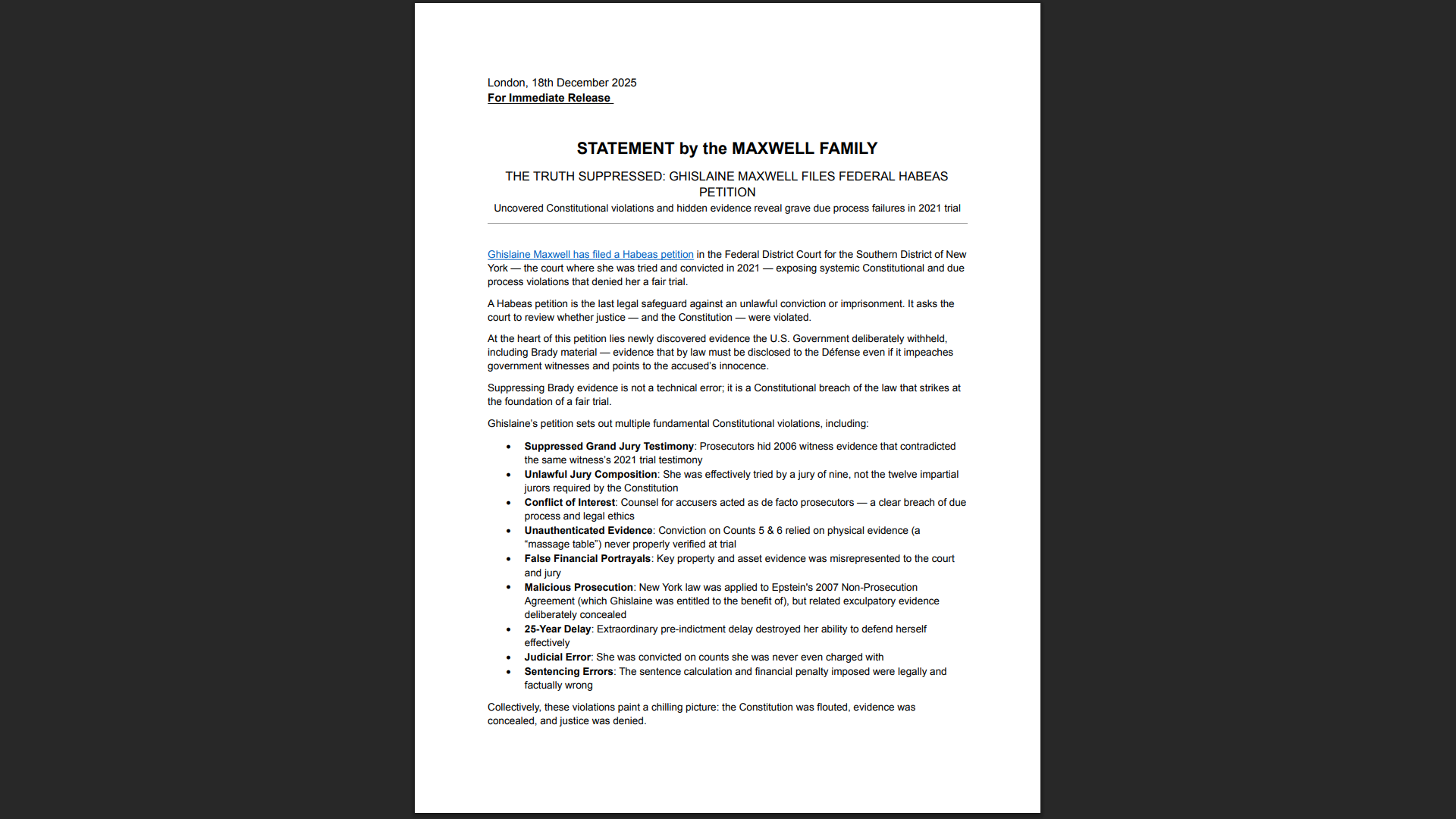
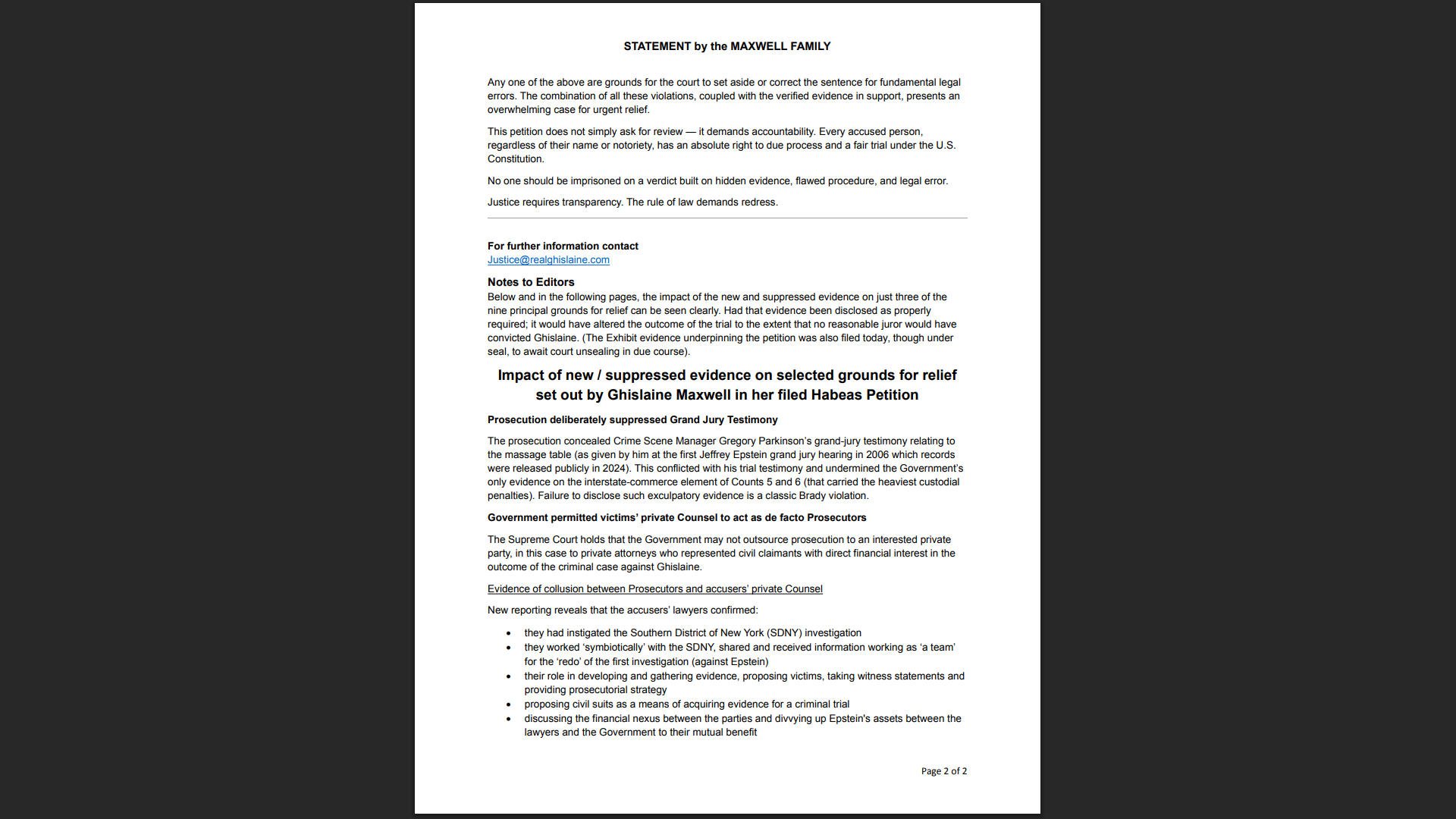
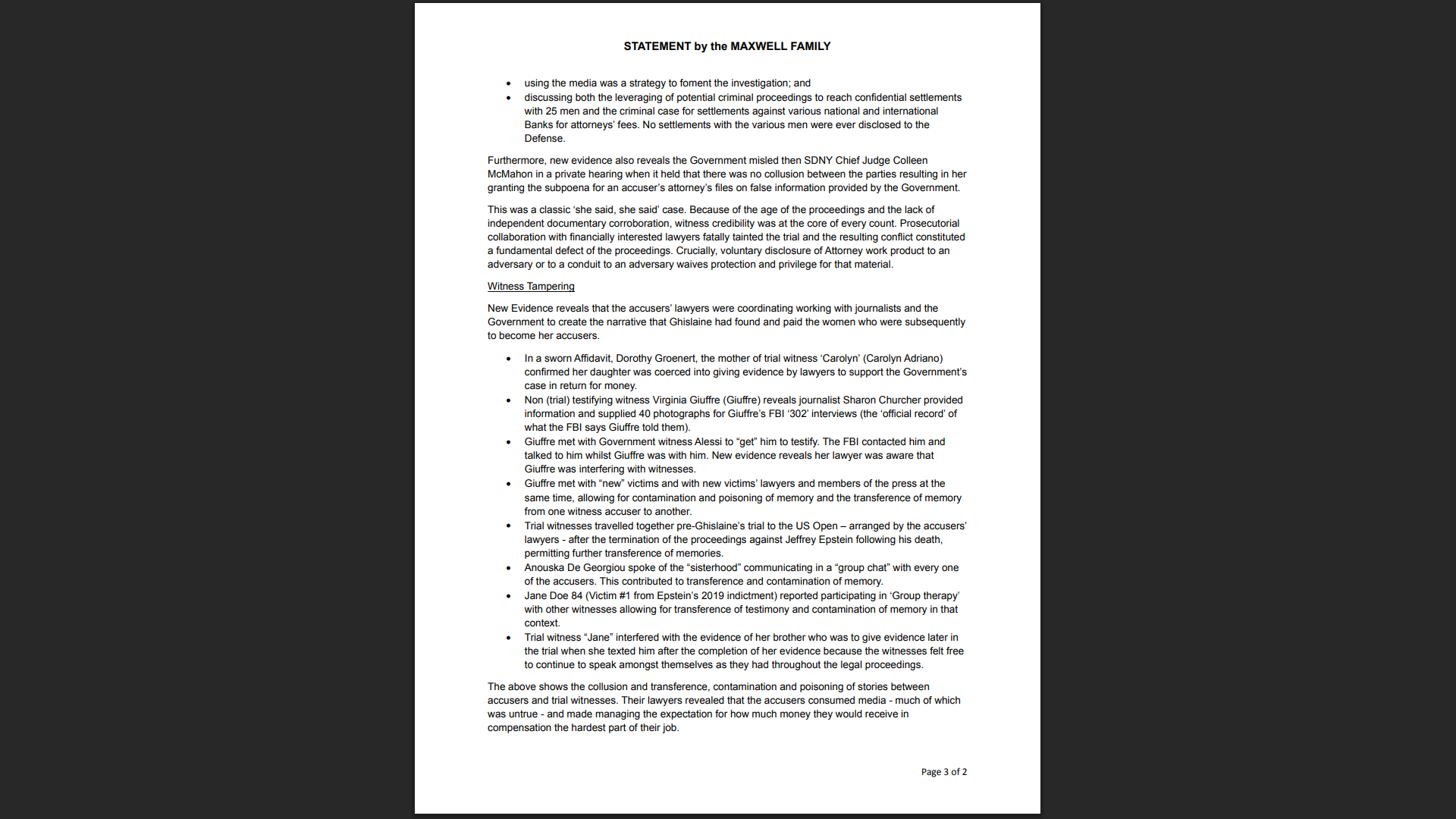
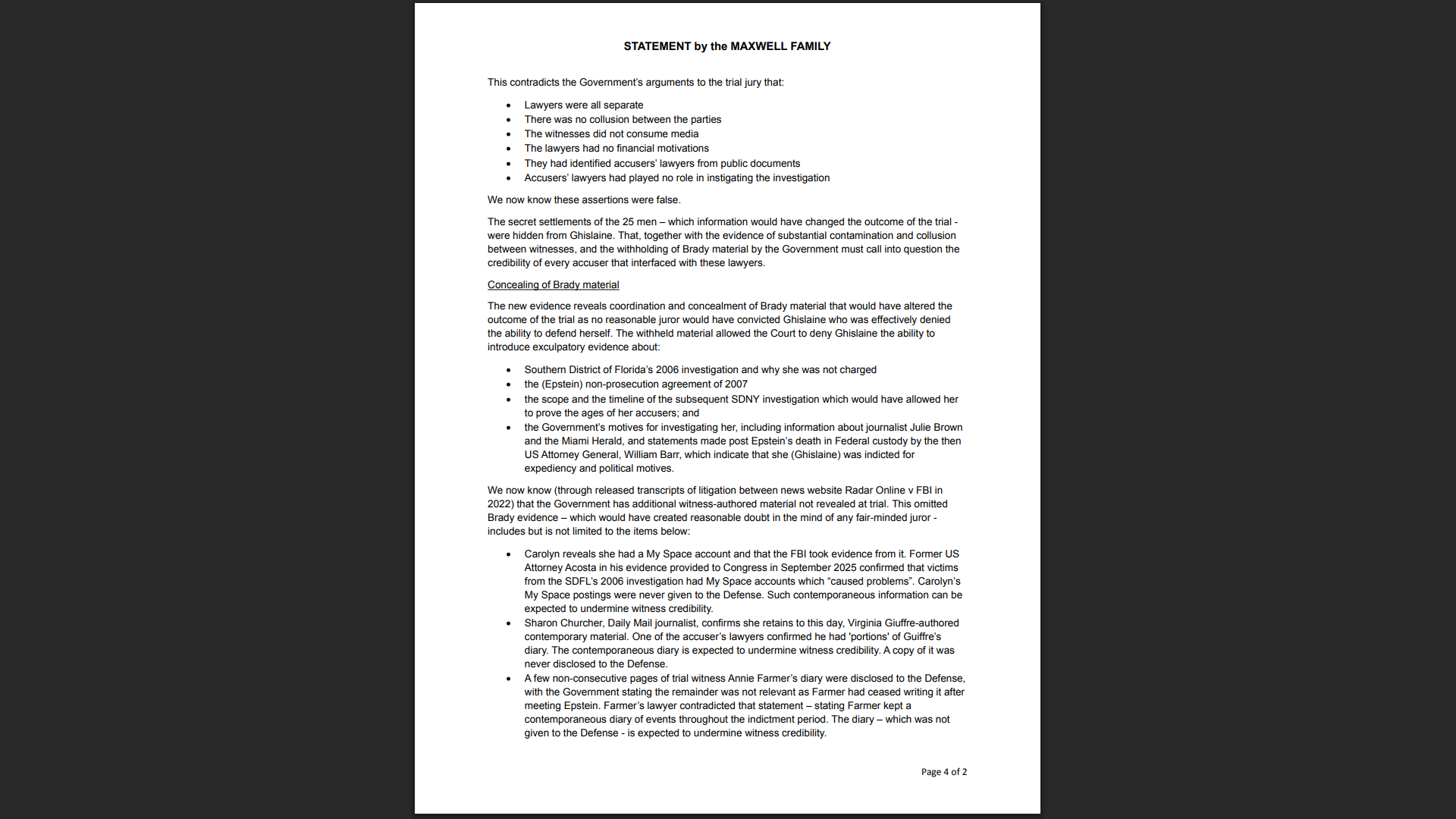
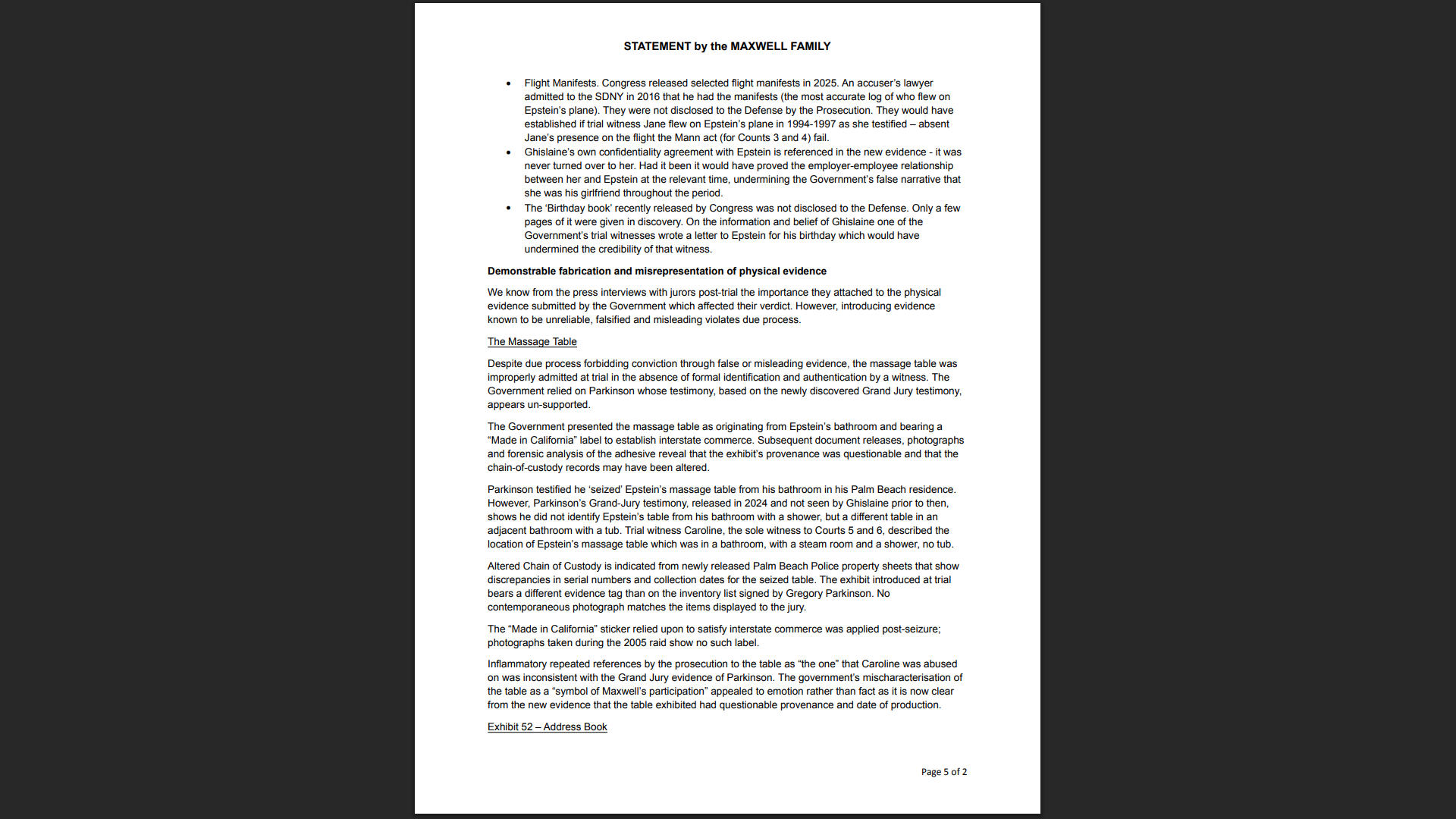
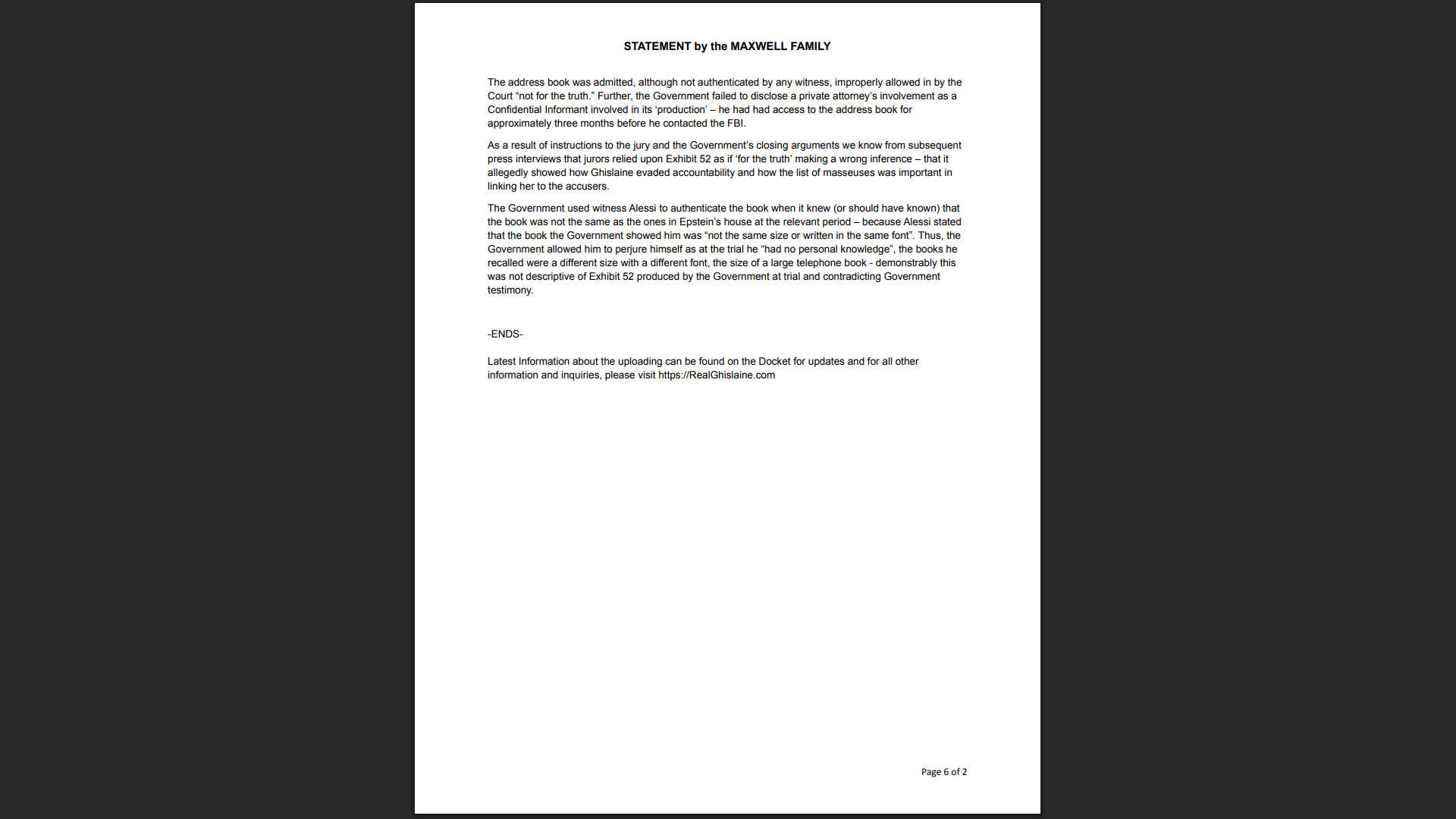
It is extremely important that you read the habeas petition in full. Click here to do so now. Please also head back to that link for updates/to view its complete filing.
I’ll be providing further insight with Jessica Reed Kraus shortly.
Tomorrow I’ll be publishing something exclusive in relation to Ghislaine Maxwell and the habeas petition (that’s all I can say for now).
Stay tuned.